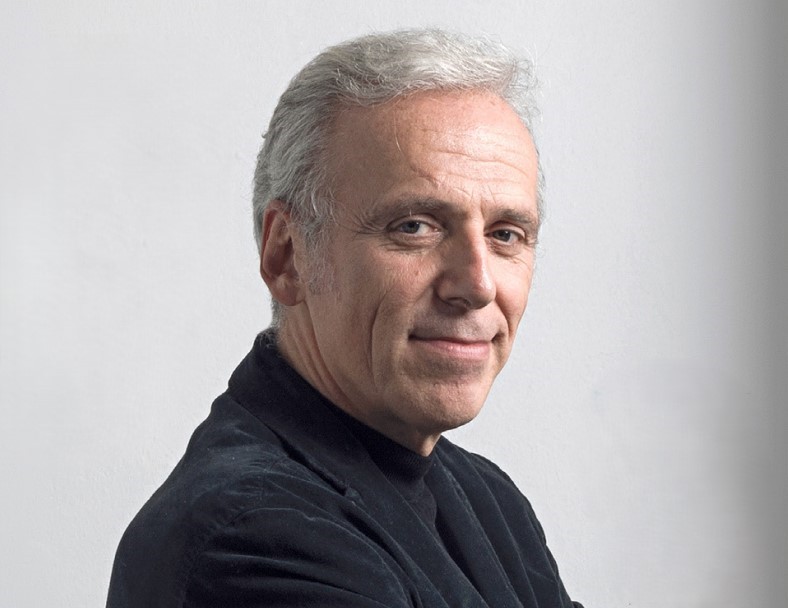
An architect and designer with a career spanning more than 30 years, Massimo Iosa Ghini is Ambassador of Italian Design in the world and of the Red Dot Network. He is also the head of Iosa Ghini Associati, which has offices in Bologna and Milan and develops projects in the fields of architecture, interior design, product design and transport systems. Since the beginning of his career he has been known for his involvement in avant-garde movements such as Bolidismo, of which he is the founder, and Memphis.
"DECORATION
DOES NOT WEIGH
THE OBJECT
DOWN; RATHER, IT
REINFORCES ITS
ARCHITECTURAL
STRUCTURE"
«The ‘challenge’ between minimalist restraint and the return to a more decorative and layered mood seems today to have found a ‘middle way’» says Massimo Iosa Ghini, Ambassador of Italian Design in the world, as well as an innovator and visionary who in 1999, ahead of his time, designed the Gioconda kitchen, which has become the emblem of a new, timeless classicism.
«When it comes to minimalism and décor, it is not about a clear distinction but rather a natural evolution. In particular, a kitchen furnishing scheme is a complex system that must incorporate sustainability, quality and technology. In recent years a standardised language has become widespread: geometric, simplified and linear to the point of anonymity. Today, though, there is a return towards (and indeed almost a need for) more layered systems that express identity. For Italian manufacturing this is a crucial transition: the value of a product lies not only in the techniques that have gone into it, but also in its visual impact, recognisability and attractiveness. Decoration, understood as the construction of meaning, once again takes on a role».
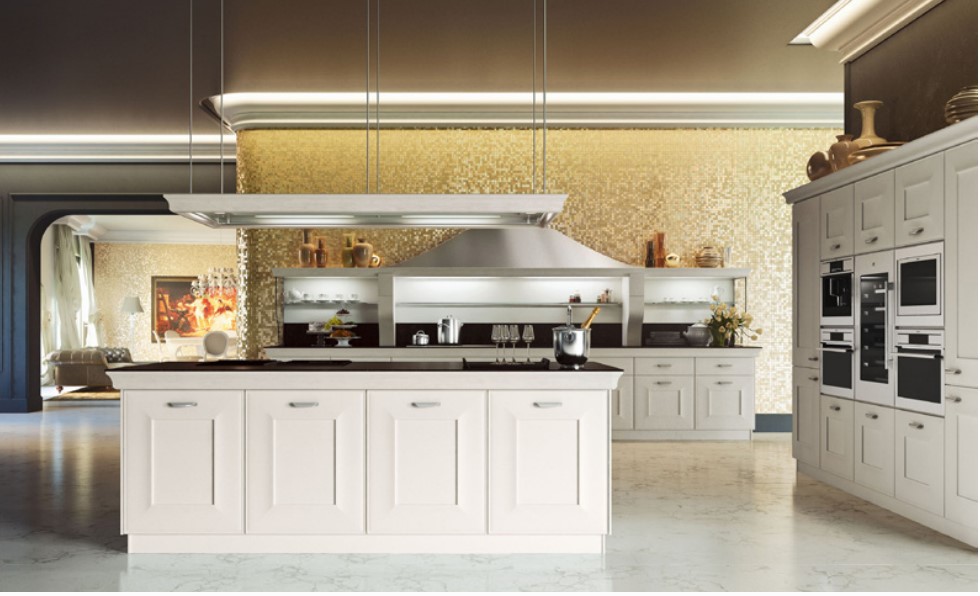
With Gioconda, Iosa Ghini launched the New Classic style in the kitchen. «20 years on, I still consider Gioconda very contemporary. At the time I asked myself a question: how are kitchens perceived and desired by people, beyond the things we designers propose or impose? Through analyses supported also by data, we understood that, in the collective imagination, the kitchen was seen as warm and reassuring, linked to tradition, with recognisable and ‘memory-laden’ elements and materials. Gioconda stems from this awareness: it evokes an idea of timeless classicism and equilibrium. It was a lucid attempt to realign the design project with people’s real imagination. Perhaps this is why it is still read as meaningful today».
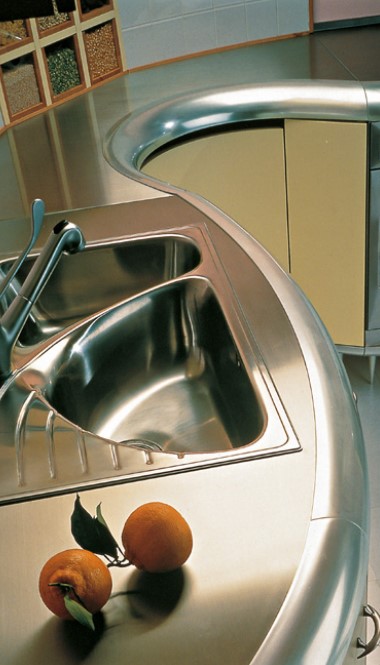
«I believe that a personal style arises from coherence and from a vision that does not bend to simplifications. I have never felt the need to retreat into a neutral or reassuring language. The kitchen, after all, is an emotional space, and it is natural for it to express character, also through
bold forms and unconventional finishes. In this sense, the move towards a more decorative taste is
neither nostalgic nor superficial. It is not about ornament, but about conscious layering that restores
presence to the object, removing it from abstract two-dimensionality. Materials also play a central role: advanced ceramics, stone, metals and treated woods that carry a cultural memory while being the result of advanced processes. This is where technology comes into play: not merely just technology, but biological, robotic and digital technologies capable of reducing environmental impact and optimising resources. It is a quiet, invisible technology that does not need to declare itself through a ‘low-grade’ form. Sustainability is a profound content rather than a language. It is within this balance between advanced technology and memory, responsibility and desire, substance and expression that the authentic meaning of design is played out today».
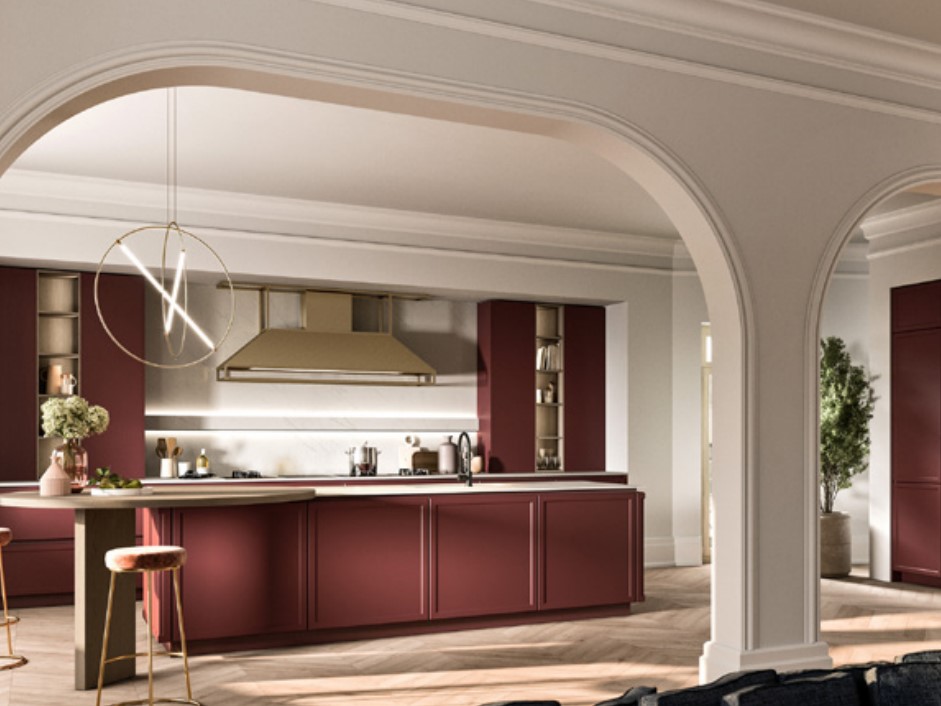
the distinctive features of the Frame kitchen by Snaidero.
«The meeting point between formal clarity and decorative richness does exist; they are different levels within the same system. The distinction is not between minimalism and decoration, but between a controlled design and one left to accumulation. In my work, clarity does not arise from ideological subtraction but from control. Every choice, always in relation to the others, contributes to the project’s identity. Richness, therefore, is not gratuitous decoration: materials, details and colours are part of a coherent system. It must also be said that the language of minimalism itself, if repeated automatically, can become redundant. The repetition of formal codes produces standardisation just as much as decorative excess does. My work moves in another direction: building clear project hierarchies with a few strong expressive elements. It is the balance between order and intensity that allows a design to maintain its distinctive identity».