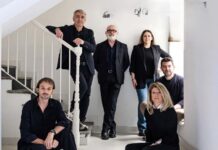
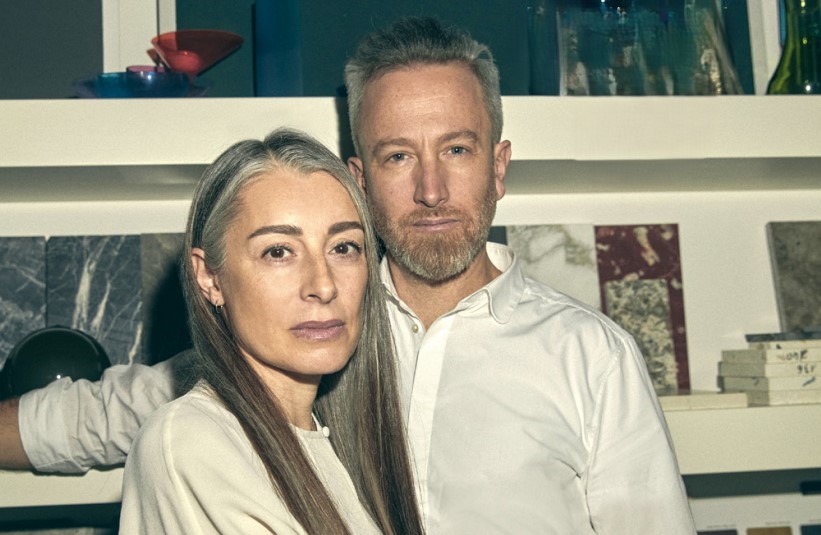
Founded in 2012, Studio García Cumini brings together the experience of Vicente García Jiménez and Cinzia Cumini, complementary personalities both professionally and personally, whose design philosophy is rooted in the concept of Slow Design. Since 2014 they have been art directors of Cesar. Their work spans product design, collaborating with prestigious brands such as Arper, Foscarini, Poltrona Frau and Verzelloni, as well as art direction and brand strategy for companies in the design sector, exhibitions and installations.
"TODAY, SIMPLICITY
IS STILL THE GOAL,
BUT NOW A MORE
MATERIAL, TACTILE
AND SENSORY
APPROACH IS BEING
TAKEN TOWARDS
GIVING DESIGN ITEMS
THEIR IDENTITY"
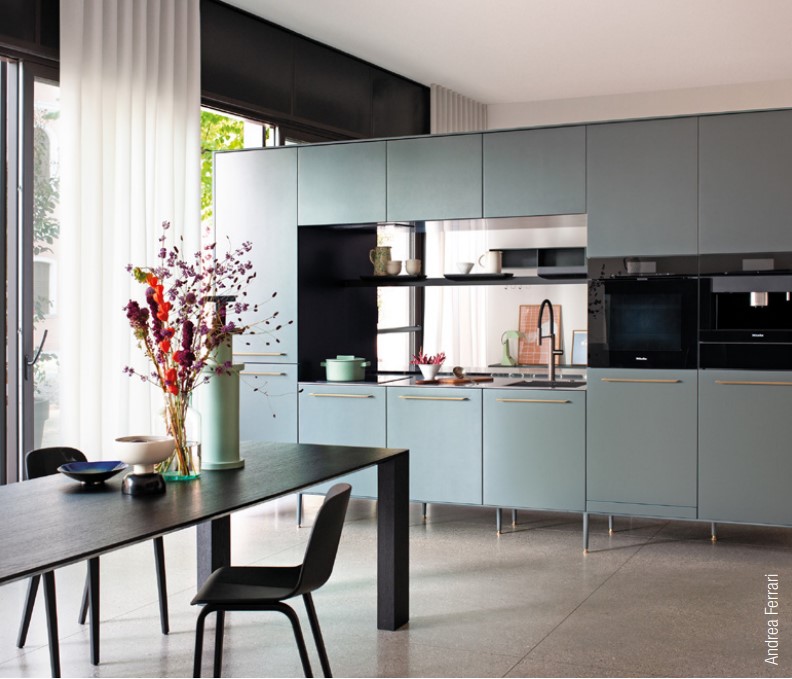
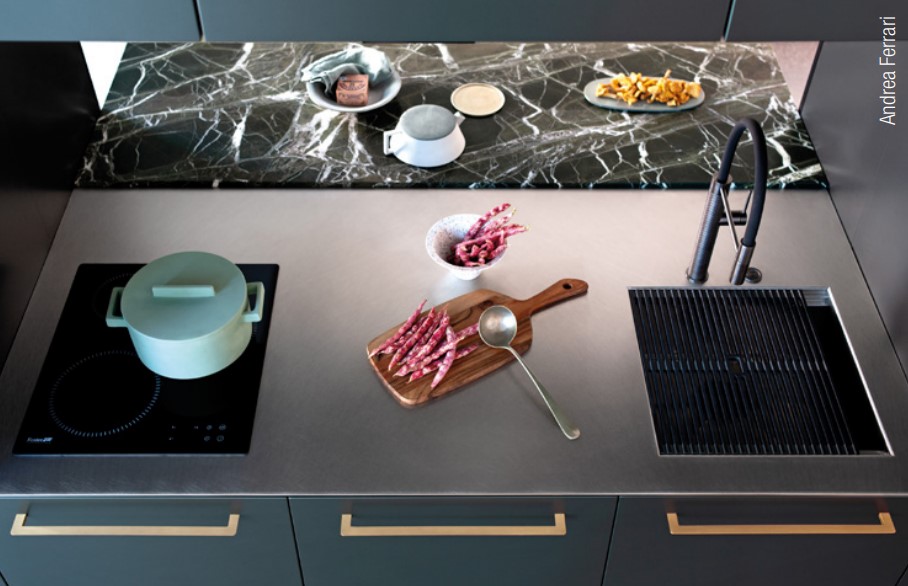
«Our approach to kitchen design reflects the way we understand design in general. The starting point is not so much form itself» Cinzia Cumini and Vincent Garcia explain, «but people and society. We try to observe how behavioural patterns, domestic spaces and ways of living in the home are changing, with the aim of anticipating a need wherever possible, or responding to an emerging requirement. We enjoy analysing, researching and observing how society evolves, even if it is complex. This attitude is reflected in our projects, beginning with Unit, which was created in 2016 from a reflection on the role of the kitchen, conceived as a system designed to endure over time and capable of accompanying those who choose it through changes in life and in the home. This connects to another aspect that is fundamental for us: the longevity of products. We are not interested in designing objects that work only at the moment they are launched, but rather systems that can live for a long time, adapt and remain relevant, evolving without ever losing their identity».
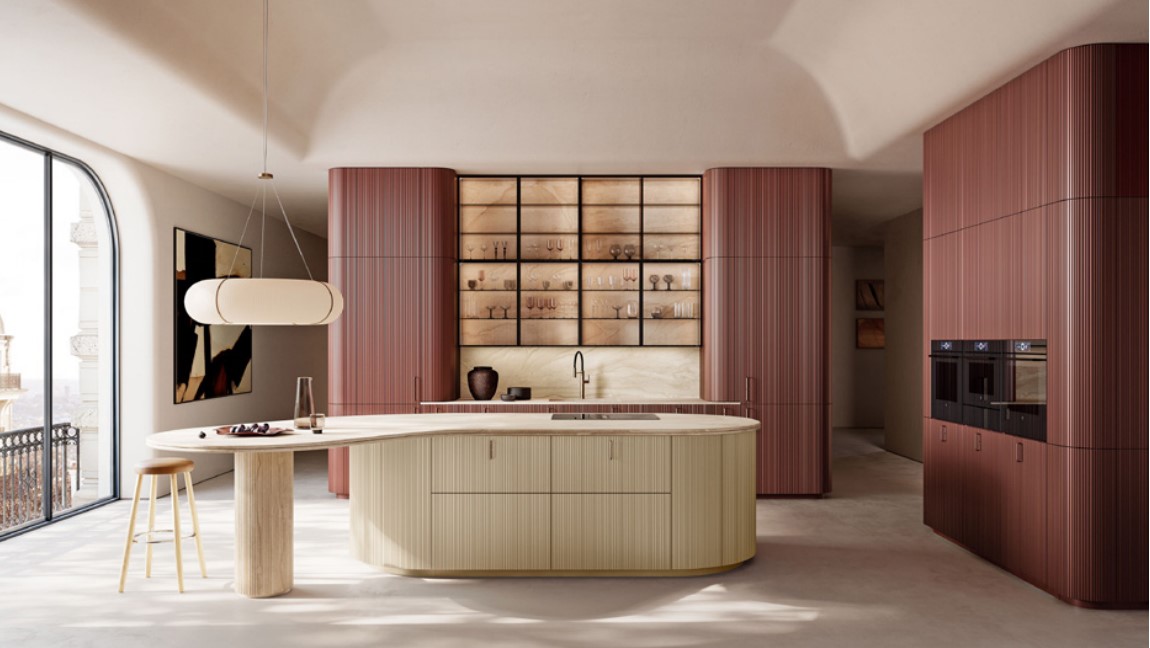
Within this broader vision, the studio also places the Tangram model, presented at MDW 2026 with an expanded concept. «The project originated in 2022 from the idea of a simple and essential composition with a strong formal identity. In this sense it has a minimalist component: clean lines and a clear structure. At the same time, it introduces fluidity and material richness, particularly through the surfaces and finishes that can be applied to the doors. The first version of the model already featured the Groove door, which introduces an almost sculptural dimension. While maintaining an essential design, the Groove texture generates depth and character. It is precisely this balance between simplicity and material presence that defines Tangram’s identity. The evolution lies in the progressive enrichment of the system: new modules, finishes and wider compositional possibilities. Each additional element makes the project more complete and more interesting to use. It is a process that keeps the project alive over time, both for those who design it and for those who choose and use it in their homes».
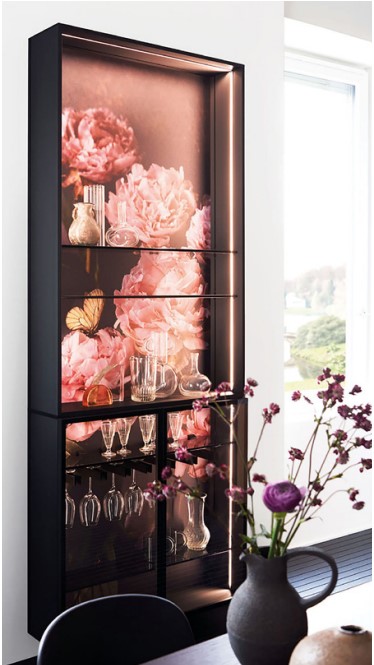
decorative surfaces created by photographer Zaira Zarotti
As for emerging trends, the studio’s vision is clear. «We do not believe that minimalism has come to an end, or that it will disappear any time soon. Rather, we believe it is transforming while maintaining its core principles: simplicity, formal clarity and linearity. In the 1990s, minimalism tended to be all
about paring down to essentials: the object was reduced to the extreme, so much so that it often lost its character. Today, simplicity is still the goal, but now a more material, tactile and sensory approach is being taken towards giving design items their identity. If you keep on removing elements, you inevitably end up with an almost abstract archetype - a line that becomes a shelf, for example and at that point it becomes difficult to characterise the design: the risk is that everything will just look the same. Contemporary design, by contrast, seeks to preserve the formal clarity of minimalism while further exploring materials and how surfaces are perceived, working with volumes, the way light plays across them and their tactile quality. In this sense, minimalism is by no means a phenomenon of the past: it is simply evolving towards a warmer, more material and more human form».