
The four-day of Sicam 25 was once again a privileged meeting place and a concentration of proposals allowing to identify trends, business development, and the forging of new relationships in an increasingly international context. This is confirmed by the final figures: 23,818 visitors representing over 9,300 companies from 113 countries, and the level of innovation and attention to detail, including the exhibits, of the products presented is testament to this.
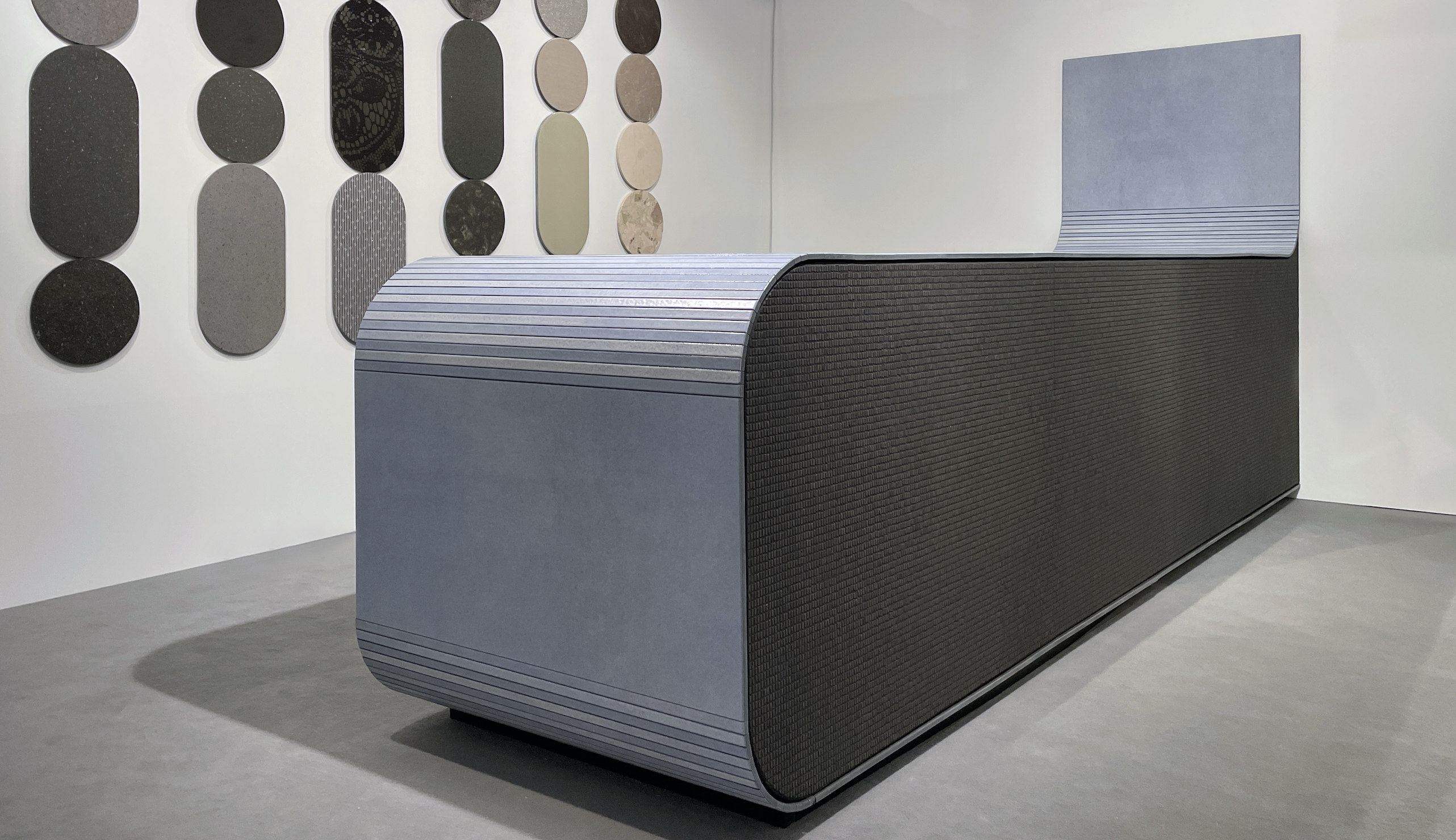
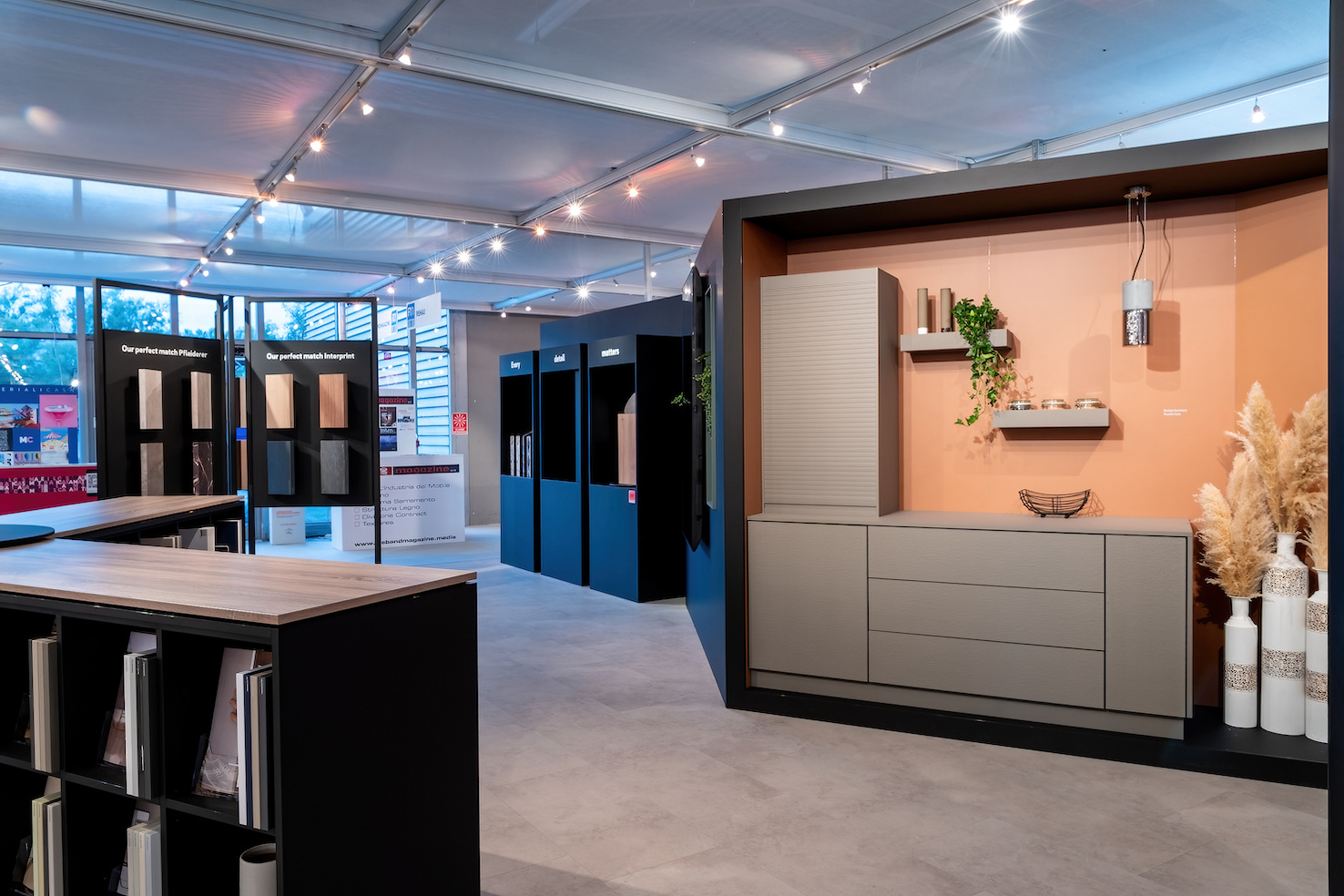
A breeding ground of creativity and research clearly visible in the world of materials, one of the most vibrant in recent years. This dynamic is also expressed through new industrial relationships and an increasingly fruitful dialogue with the design world. A prime example is the kitchen proposed by Nerosicilia, pictured above, the result of joint research on materials between the company and Florim, interpreted by Alberto Minotti's vision and realized thanks to the construction expertise of MVK+Italia.
In general, as seen at Sicam, the challenges are many and now go beyond the long-term resistance to any agent, a prerequisite for cooking, and the sustainability of processes and products, which is increasingly required.
Nature teaches
Among the most relevant themes is the desire to give greater depth and structure to tech materials, from decorative papers to laminates, from increasingly popular ceramic coatings to newly formulated mineral agglomerates.
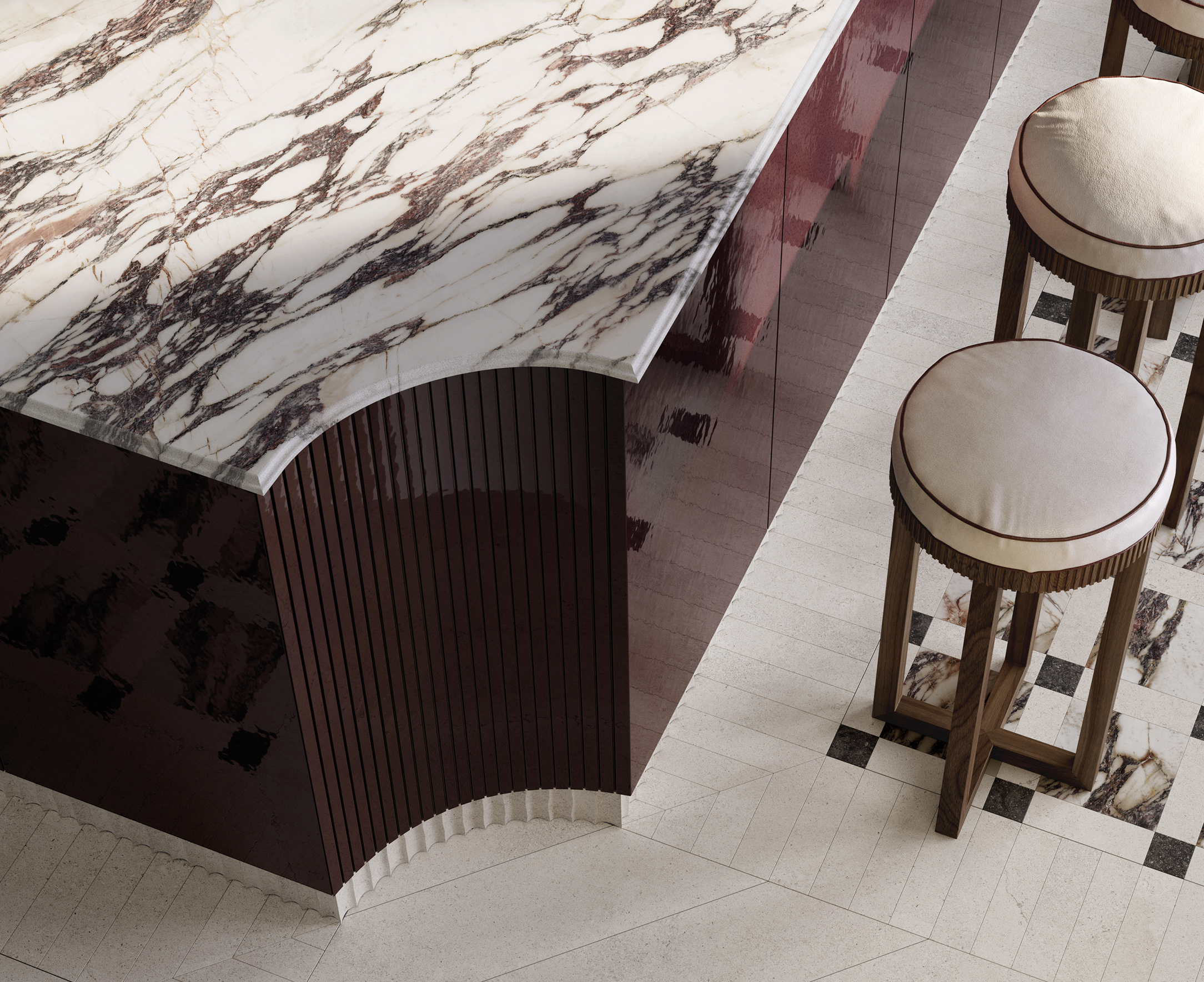
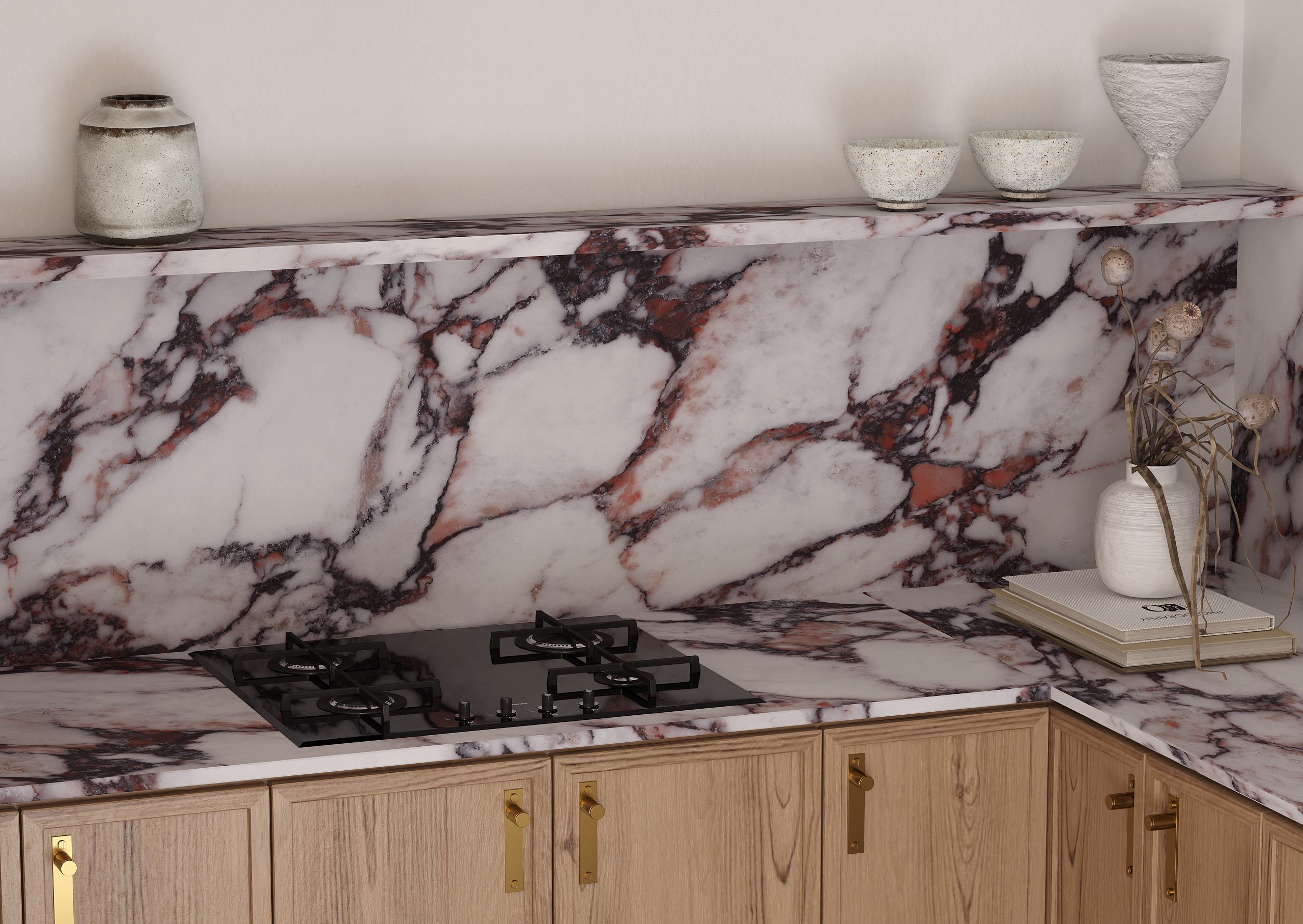
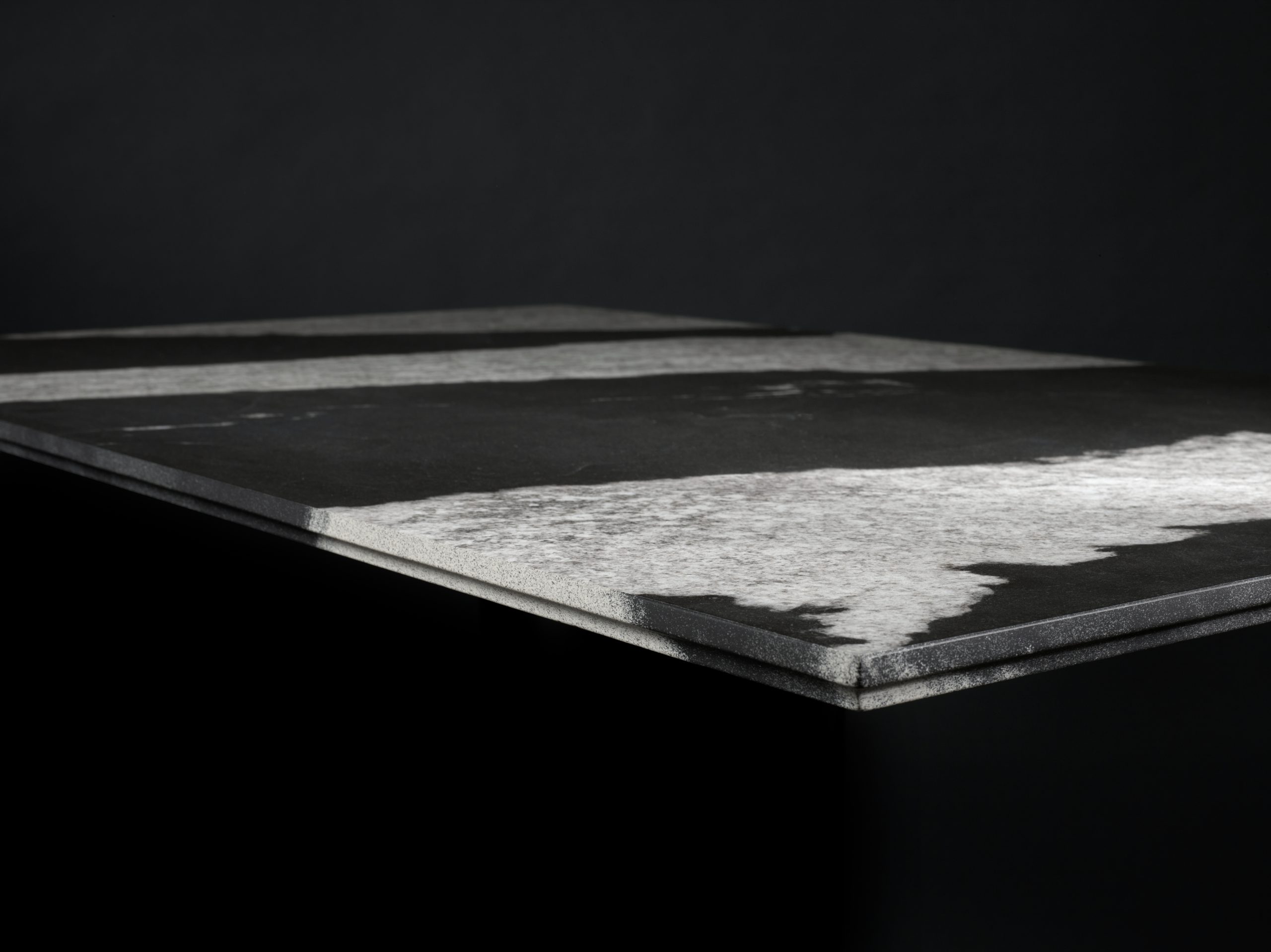
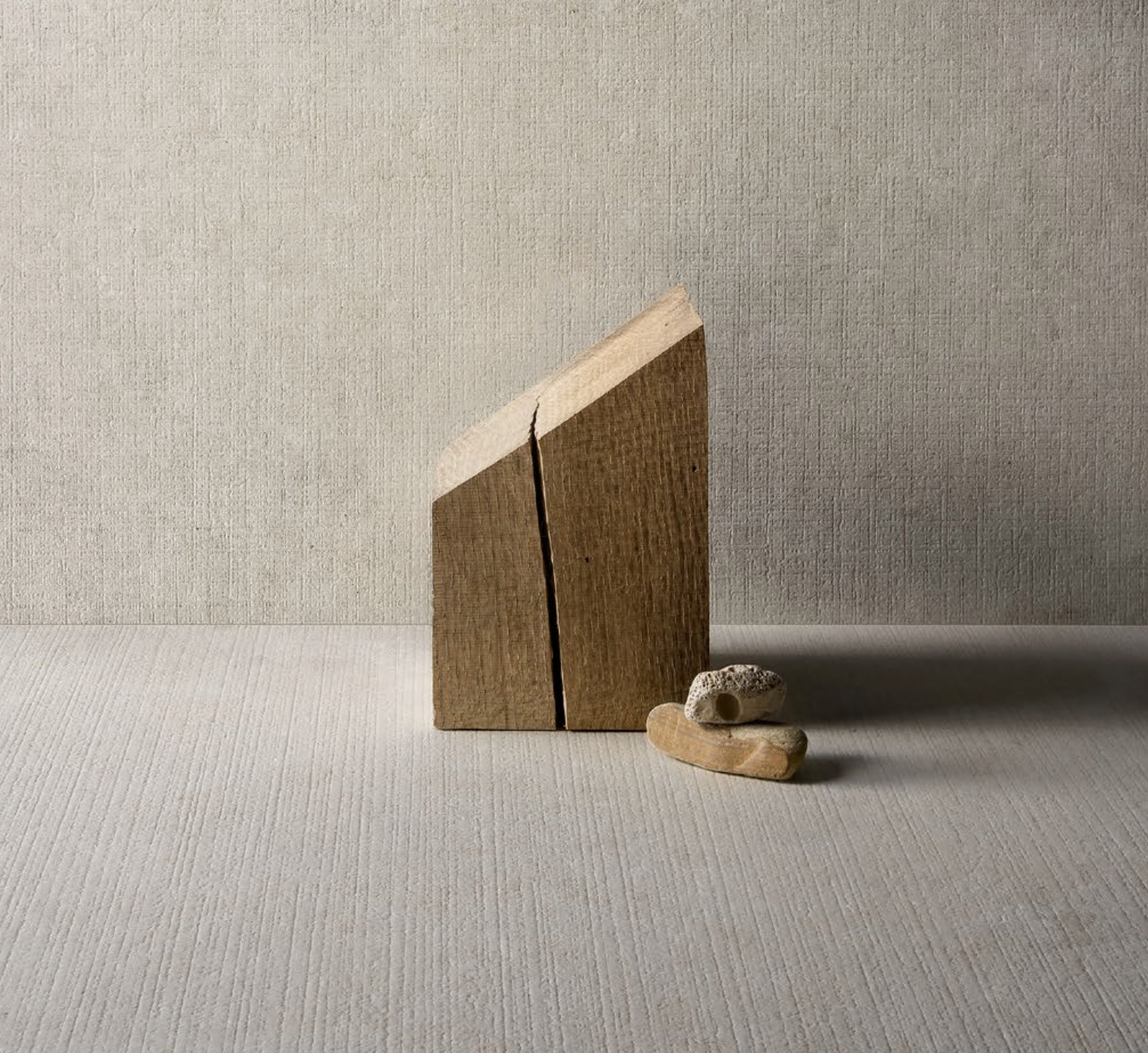
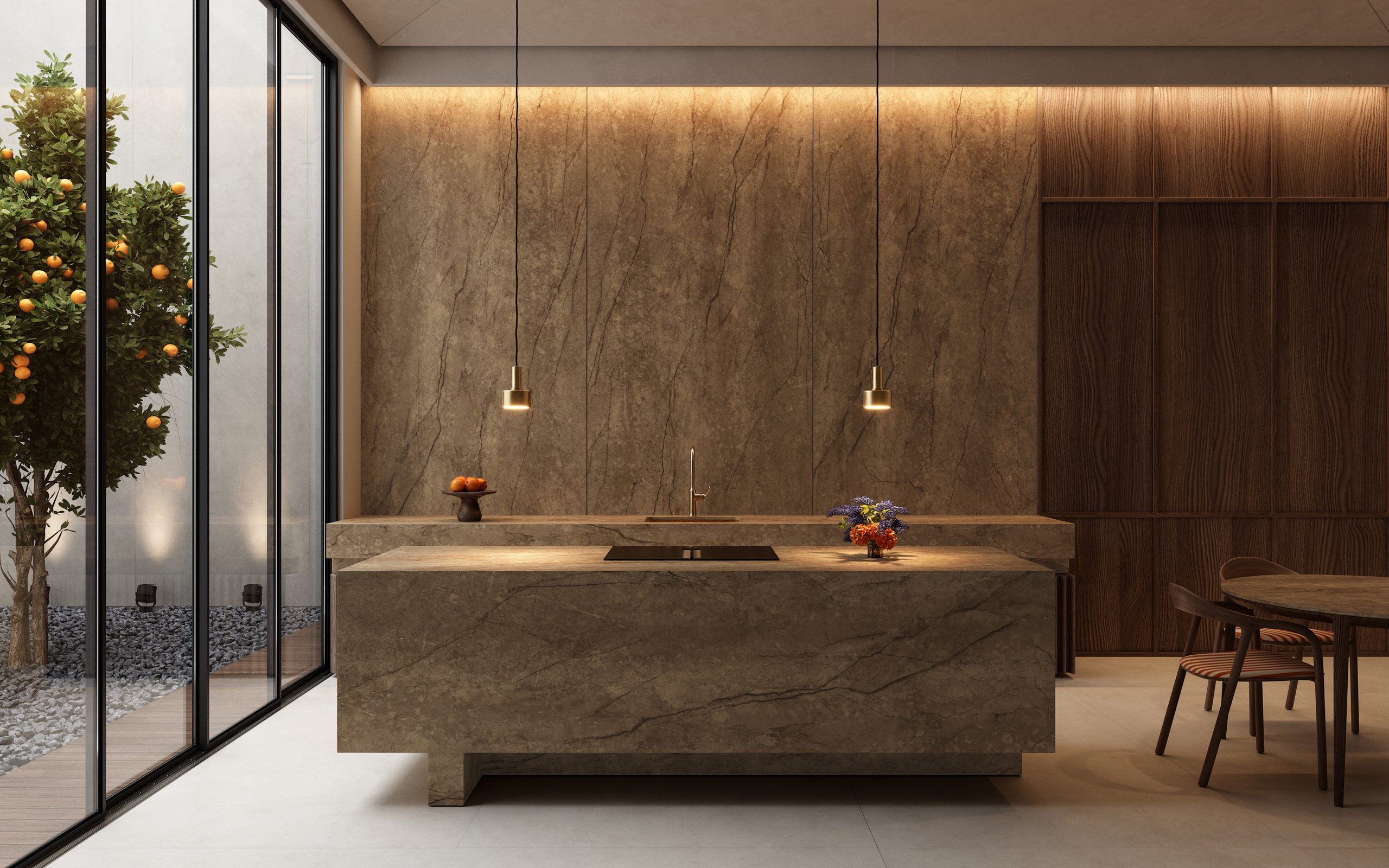
Through-grained veining, reliefs, and depth of design are ways to make engineered products increasingly similar to natural materials. The most striking example is presented by Marmo Arredo, which is shifting the paradigm of processing thanks to its exclusive partnership with Arke Vitium, a leading company in technologies applied to mineral surfaces. In practice, the Quartzform® slab, in an innovative formulation, is first machined and drilled to the project's specifications and then treated with a texturizing process that allows for the high-precision reproduction of the veining and nuances typical of natural stone.
Cosentino presented an exclusive preview of its new Éclos® brand, which inaugurates a new category of mineral surfaces free of crystalline silica, with a high recycled content and an innovative layered design system.
Even in the world of ceramics, research into through-graining and a new material tactility has produced increasingly lifelike results. Examples include the faithful reproduction of Sapienstone's Fior di Viola marble, highlighted by the workmanship of the countertop presented at Sicam, or the Neolith Iconic Design project debuting in Italy with Neolith Victoria, a surface created using 3D printing technology and featuring a through-grain design inspired by Brazilian marble.
For Infinity Surface's Arkèon collection, developed in collaboration with Giuseppe Bavuso, the natural references are fossils, stone, and plaster, and the focus is on textures that enhance their materiality.
Warmer neutral colors
Available in many variations and shades, the dominant trend is towards warmer colors, from the lightest to the darkest, and even when we're talking about grays and not just the many beiges, ivory, sand, and so on.
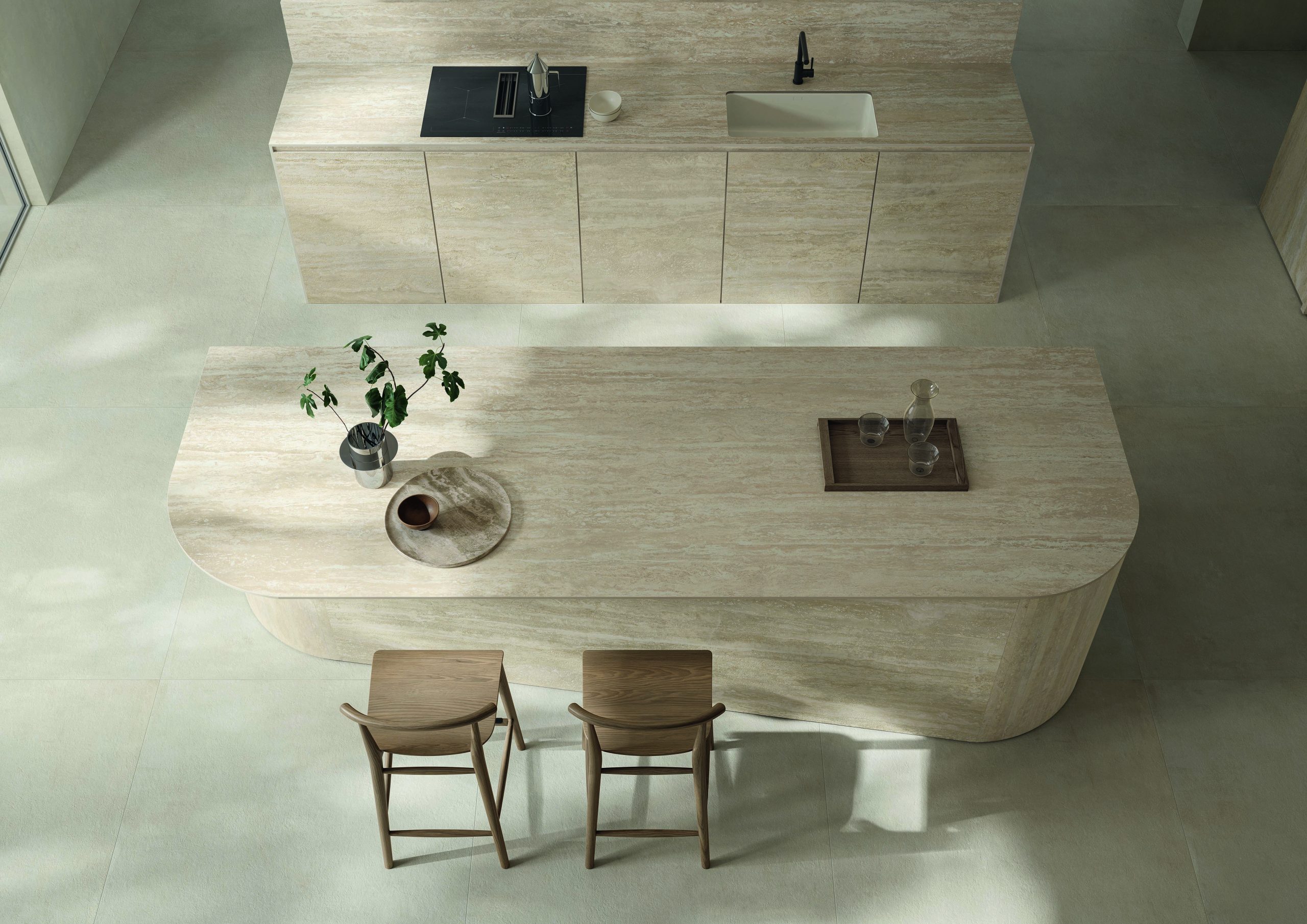
It is no coincidence that among the most cited marbles we find the Taj Mahal and among the stones, Travertine.
They are working on combinations of different textures and colors, but always in nuances, as seen in Marazzi The Top with the new Concrete Look or Stone Look finishes, or on the integration of different materials united by a common color code, as proposed by Rehau for its edges, shutters and surfaces.
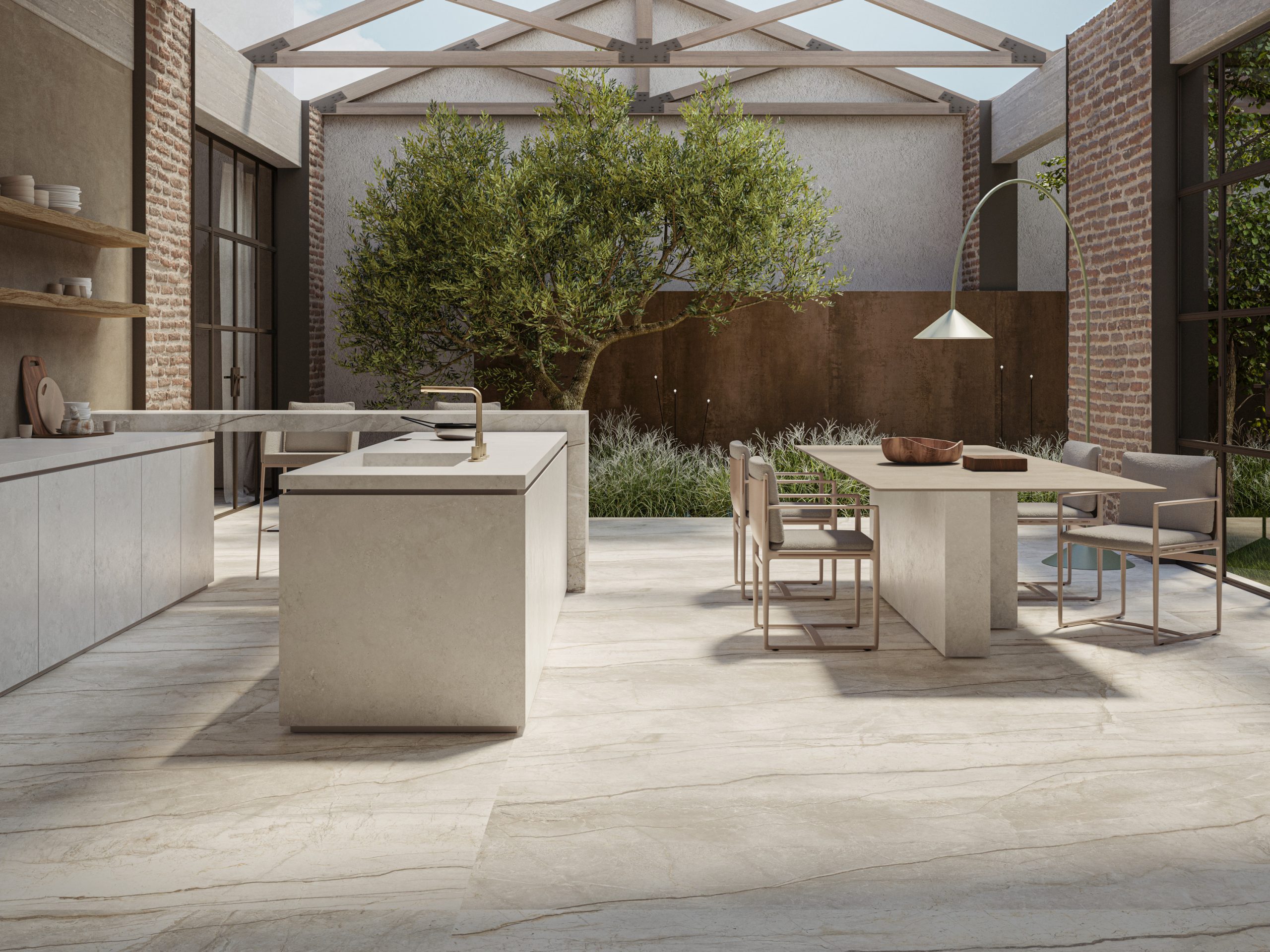
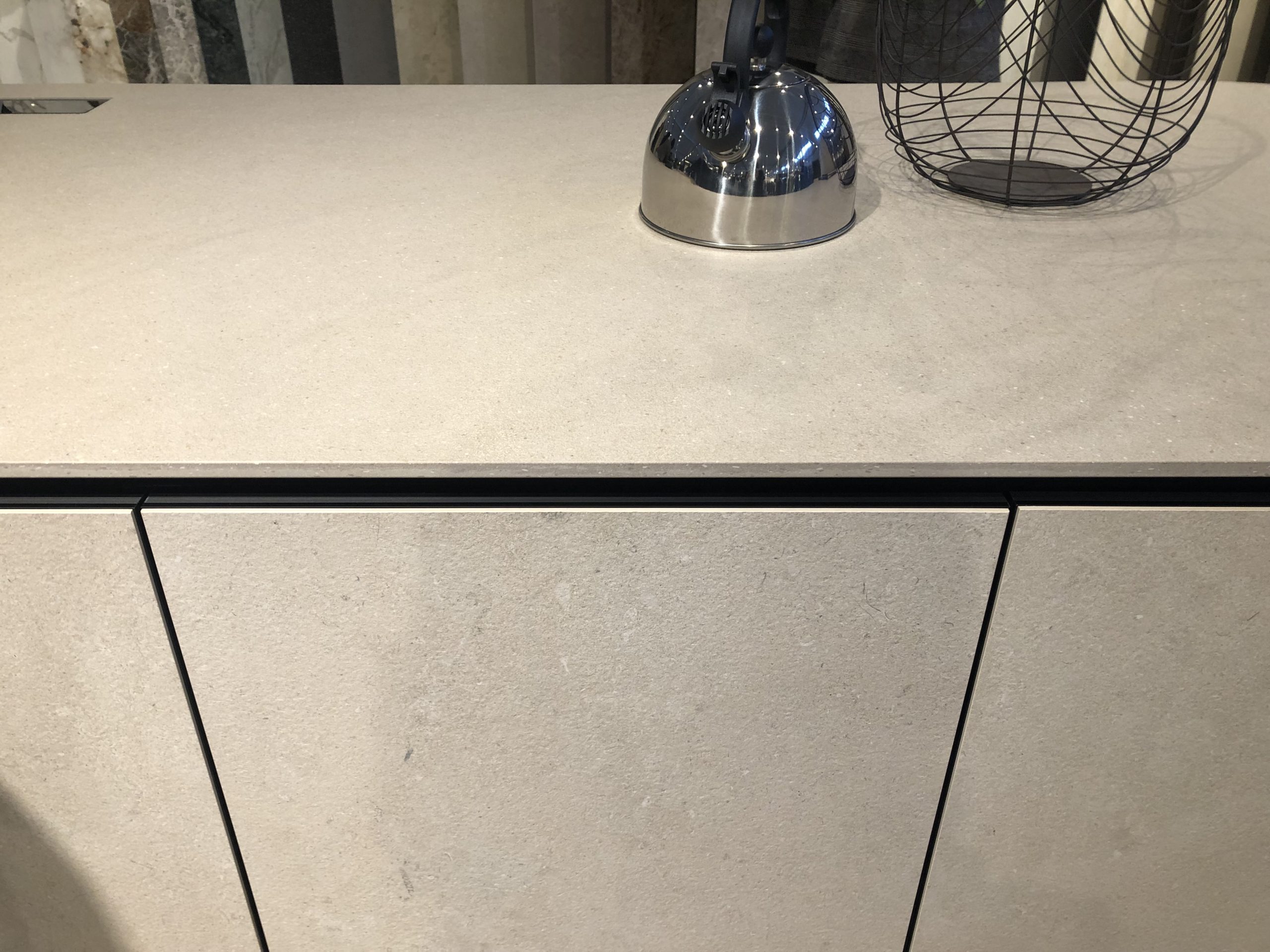
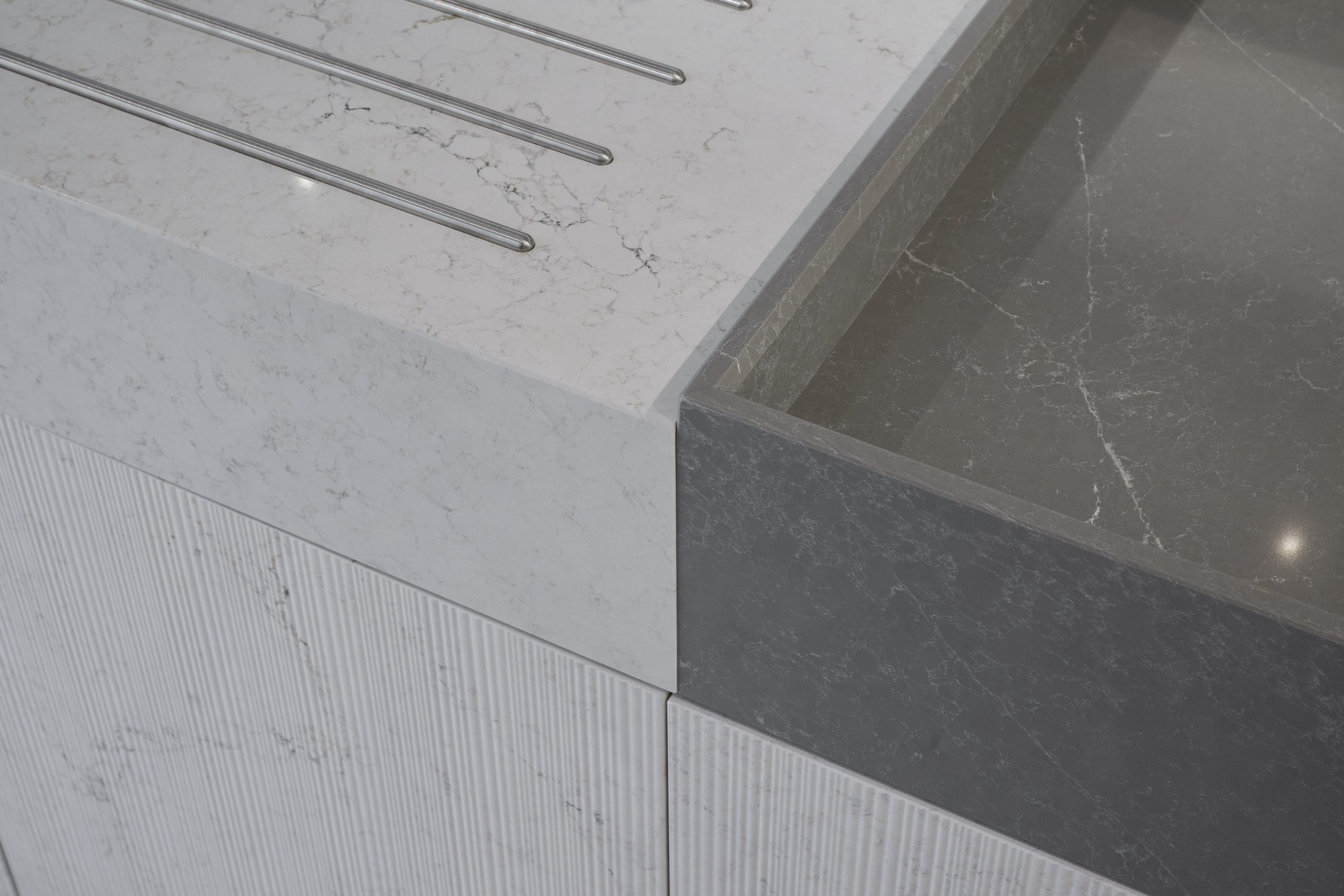
Florim has chosen seven common colors to be able to combine the 3 mm Skin slab, reinforced with fiberglass and also ideal for covering doors, with the 12 mm one, perfect for countertops.
Also the FENIX®, Arpa® and Formica® brands, along with Homapal® and Getacore®, united in Broadview Materials Europe, have focused on an integrated and coordinated vision of materials, surfaces and innovative solutions.
Concerto, the new collection by Santa Margherita, created in collaboration with Giuseppe Bavuso, is another example of research inspired by natural stone and offers six shades developed to integrate harmoniously with each other.
The need to create a chromatic dialogue between different materials or thicknesses has also led to collaborations between different companies, such as Sm'Art and Laminam. Guided by the vision of Andrea Federici, an increasingly acclaimed designer in the sector, the two companies worked on identical colorways to allow designers to explore their material choices.
Tactile laminates
Regarding Sm’Art, the new entry was the Essenza collection, a word that refers both to the world of wood and to the minimalist style in which the different woods are presented, enhanced by a synchronized, deep, tactile, and authentic finish.
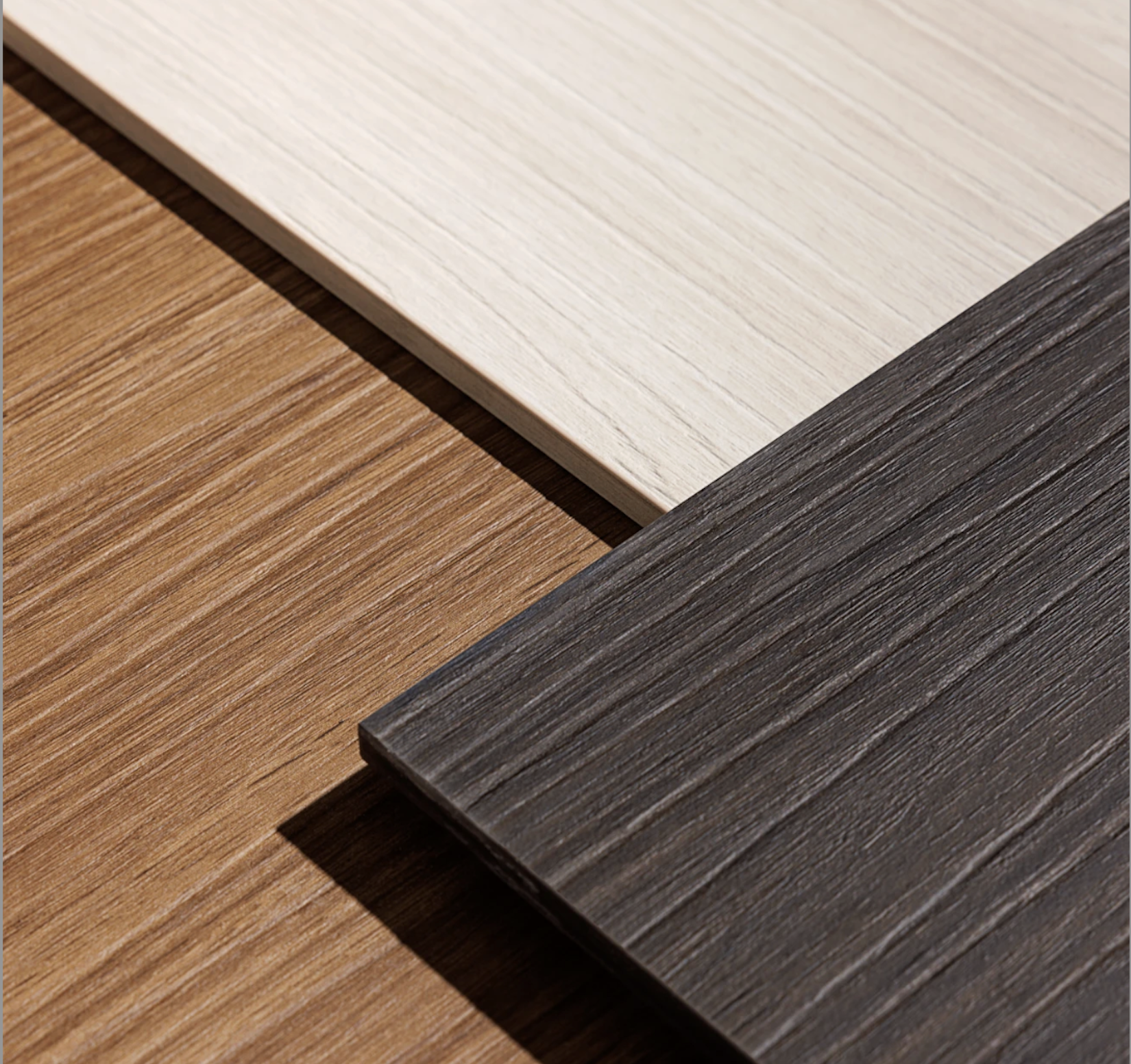
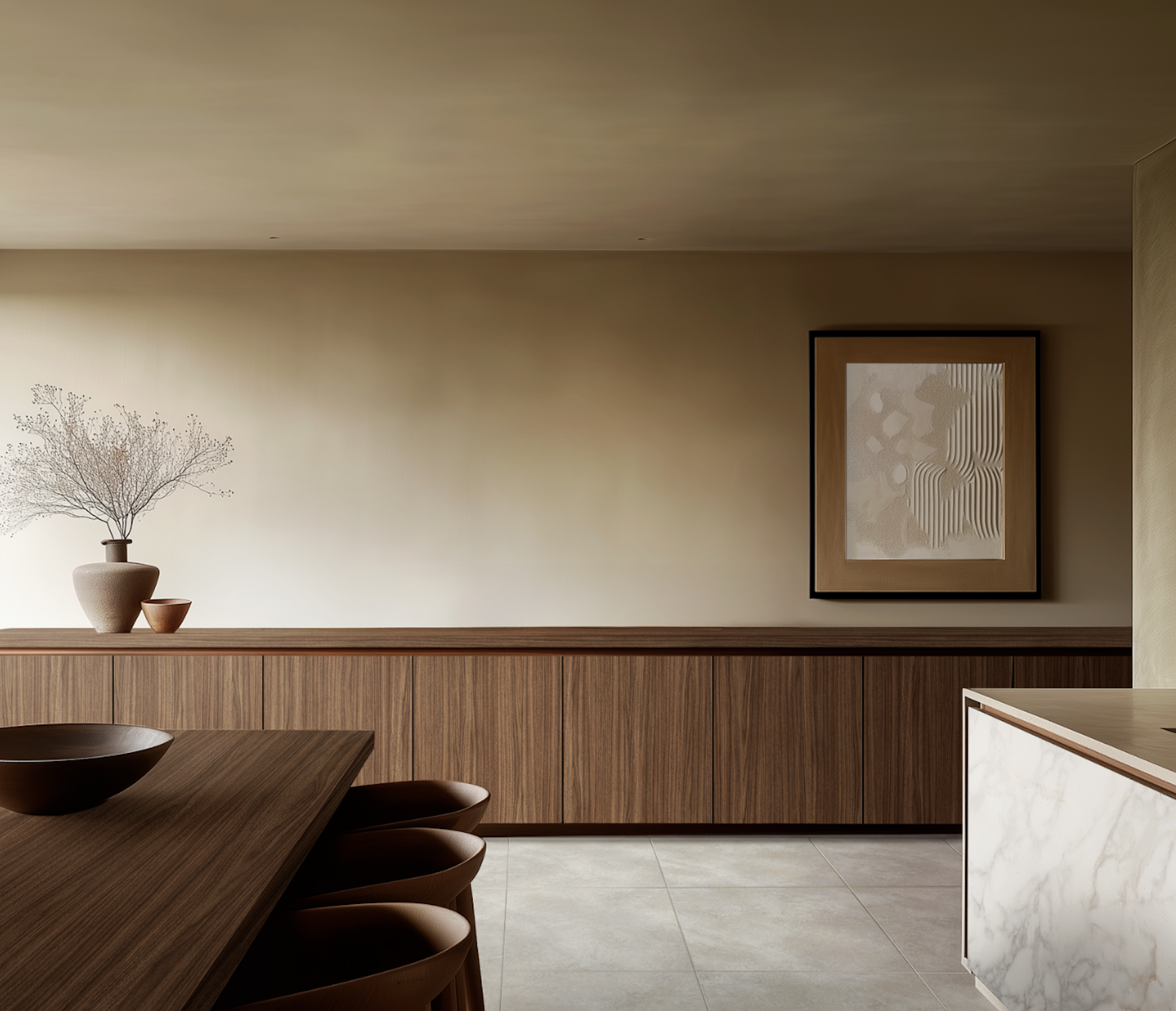
Still on the subject of wood, Schattdecor study about all the supply chain reevaluates walnut with Ravello Walnut, a timeless wood.
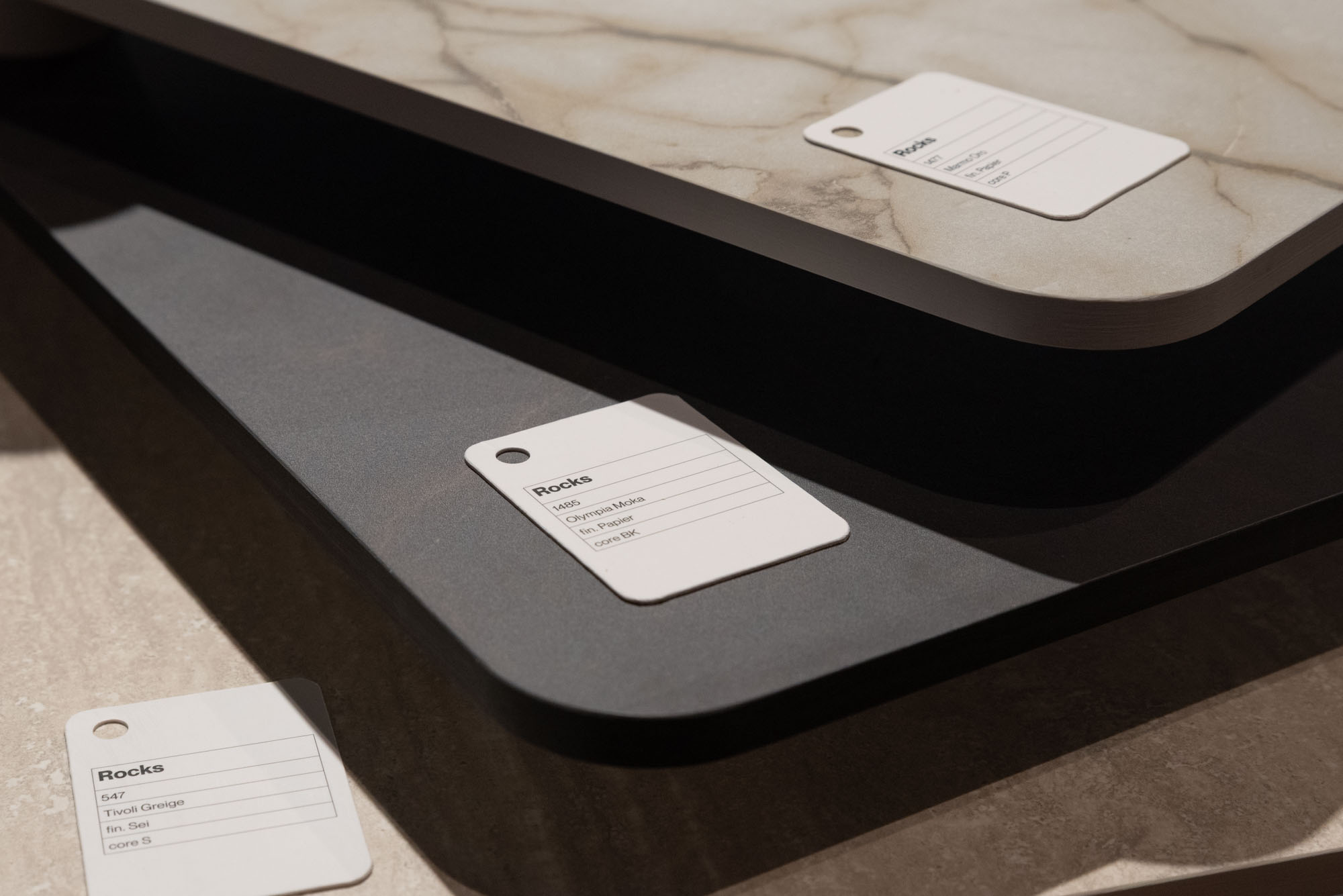
Continuing about the evocative power of laminate and its remarkable tactility, we highlight the evolution of Abet Laminati's Rocks collection, which highlights imperfections and irregular reliefs. Also noteworthy is the work done on the laminate core, which enhances the laminate's internal component with colors other than classic kraft.
The corner? It's round
Rounding is another must-have that has caught everyone's attention. It took Baido's expertise in processing to make it a success in transforming laminate and to offer the same rounded finish for the door that opens the corner.
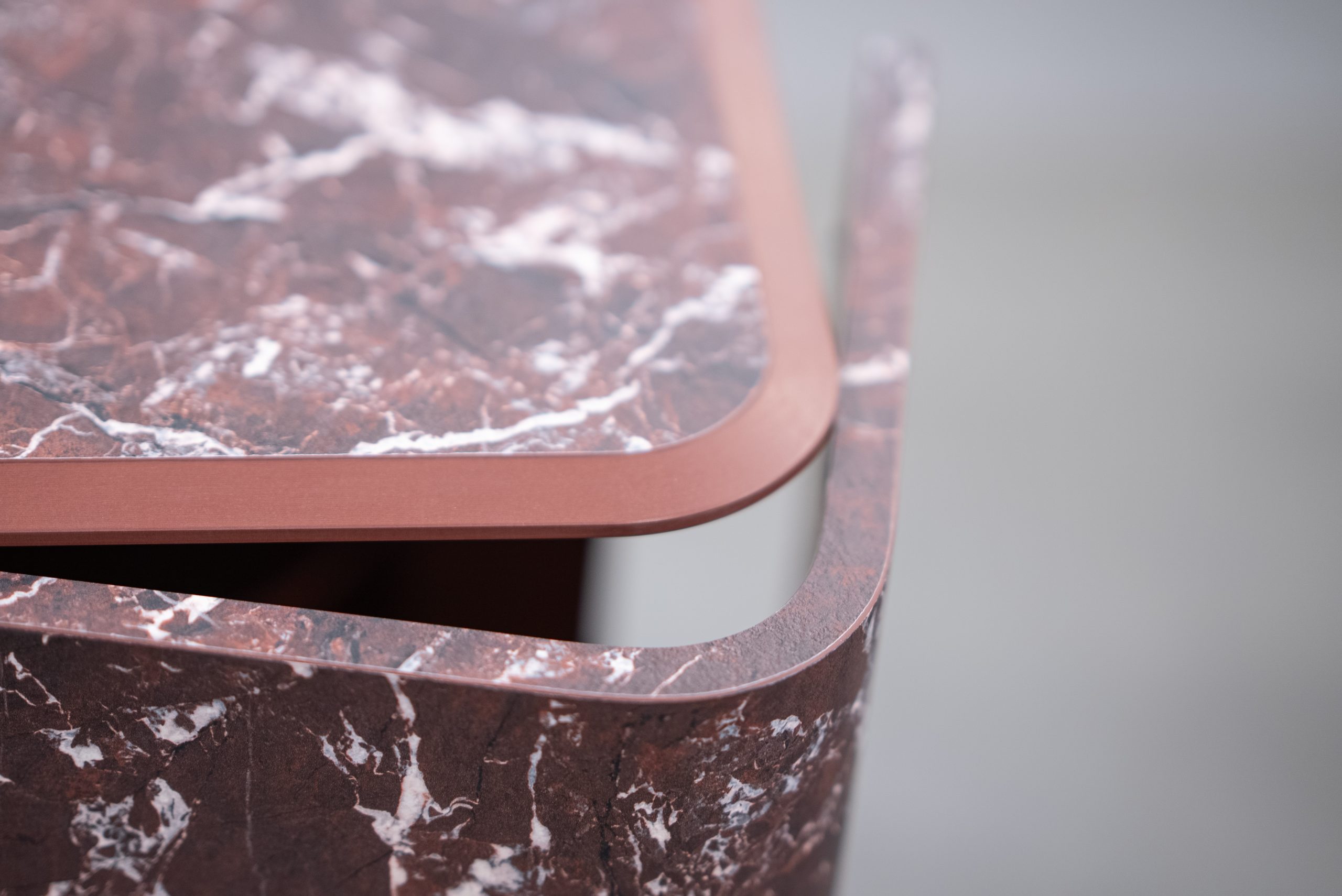
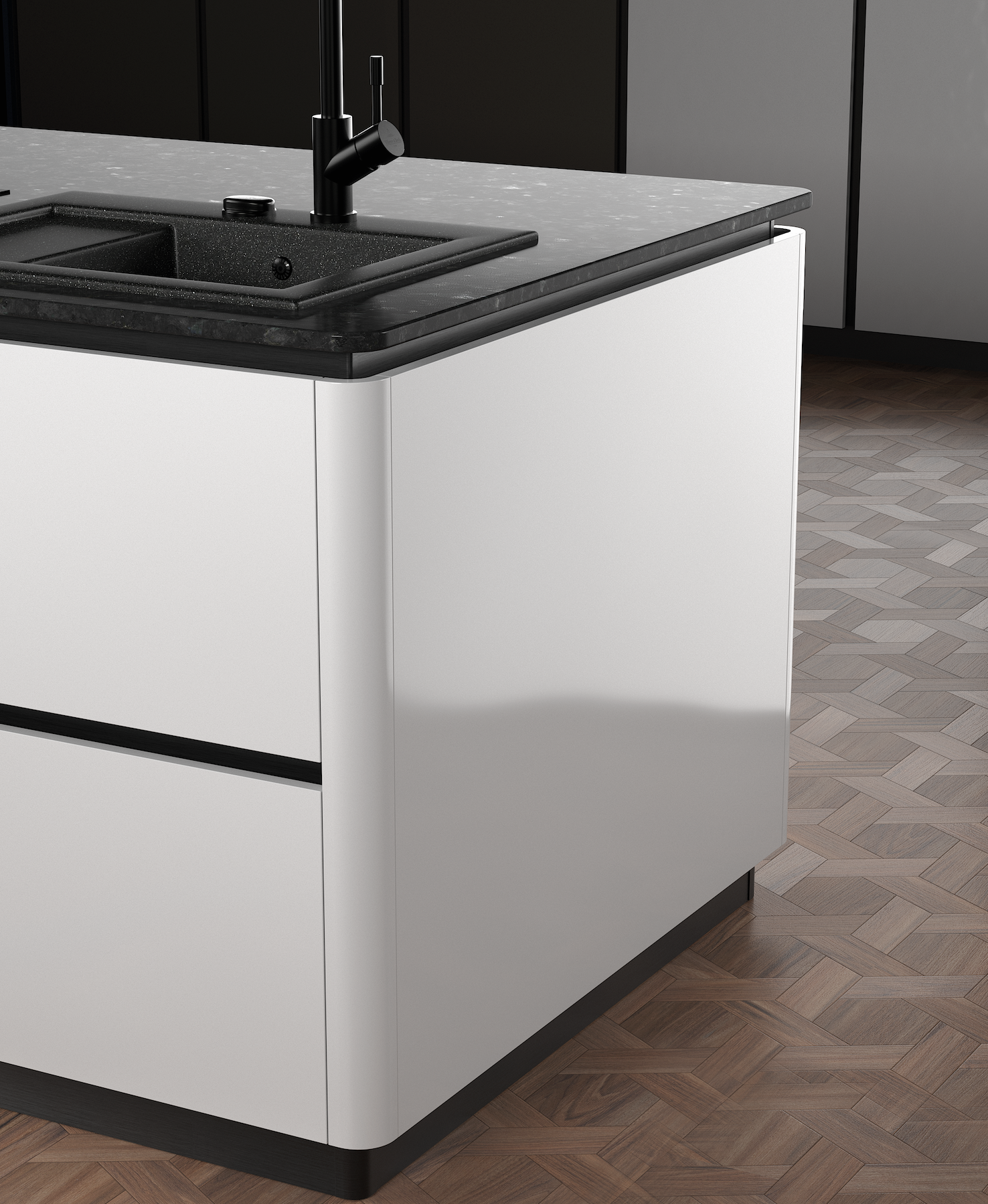
Even ceramic slab manufacturers are dealing with rounding and Florim, for example, does so through an annealing process with a permitted radius of 15 to 40 cm.
For Italgraniti's debut in the world of large slabs, with the Italstone brand, the focus was on its proprietary RealUp® technology, which guarantees ultra-realistic textures, and on the innovative 230-meter-long cooking oven, which, thanks to extremely precise thermal control, makes the slabs more resistant and easier and safer to work with, even with rounded corners.
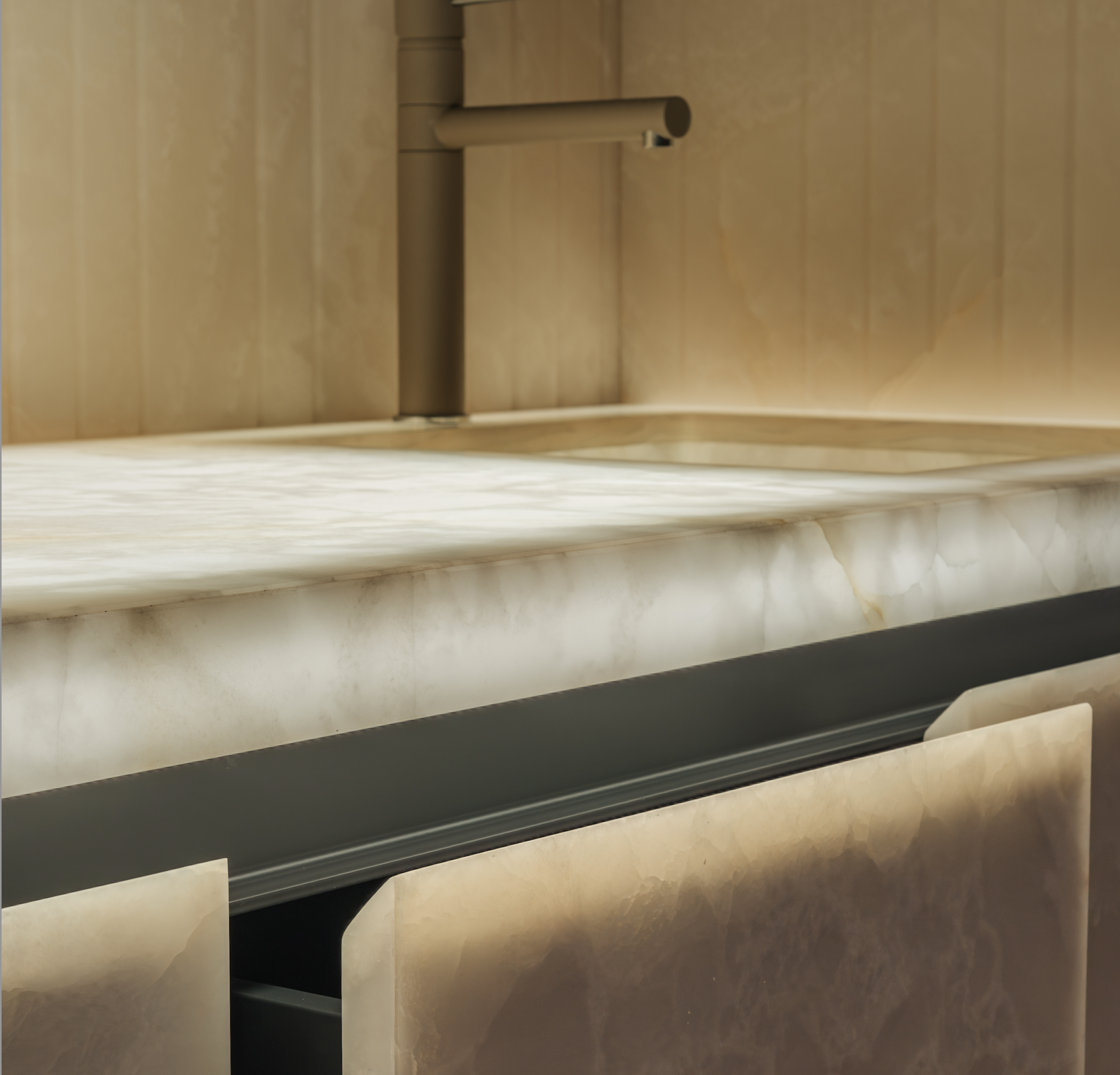
Simeg's extensive stone-working expertise is evident in the products presented at Sicam, particularly in the kitchen coated in LED-backlit white onyx, with rounded doors and worktop.
Finally, Ossicolor, a specialist in aluminium processing, proposed the groove created specifically for rounded corners.
Household appliances & Co.
As mentioned at the beginning, this year's Sicam format was particularly attractive to the world of household appliances. For some, it was a confirmation, for others a return, and for still others a debut.
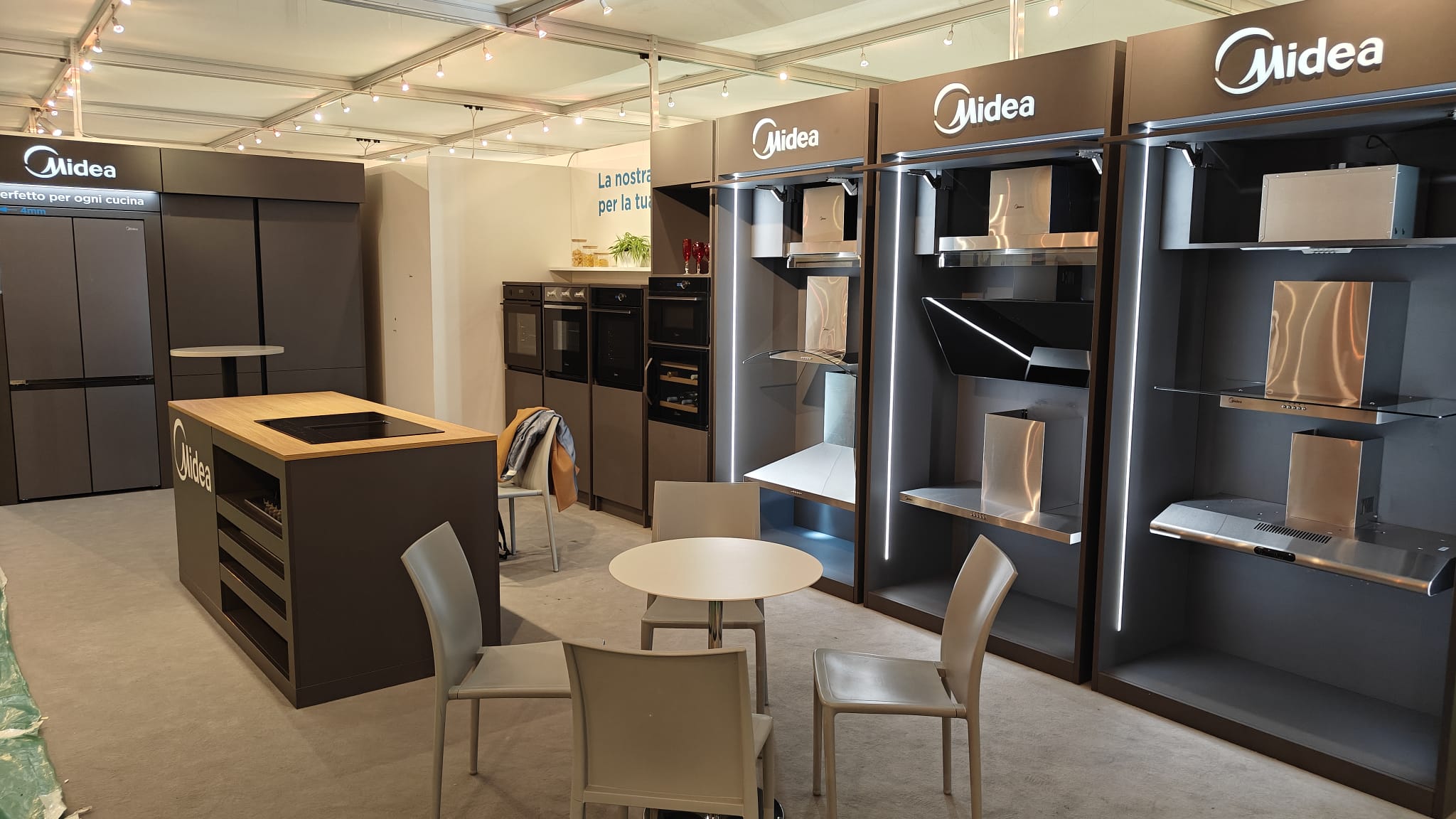
Starting with the "first time," it was a surprise to find the stand of the Chinese giant Midea, which has decided to officially launch its brand into the built-in market right here in Pordenone. This range will be sold only through specialized distributors and is different from the one already marketed exclusively by Mondo Convenienza.
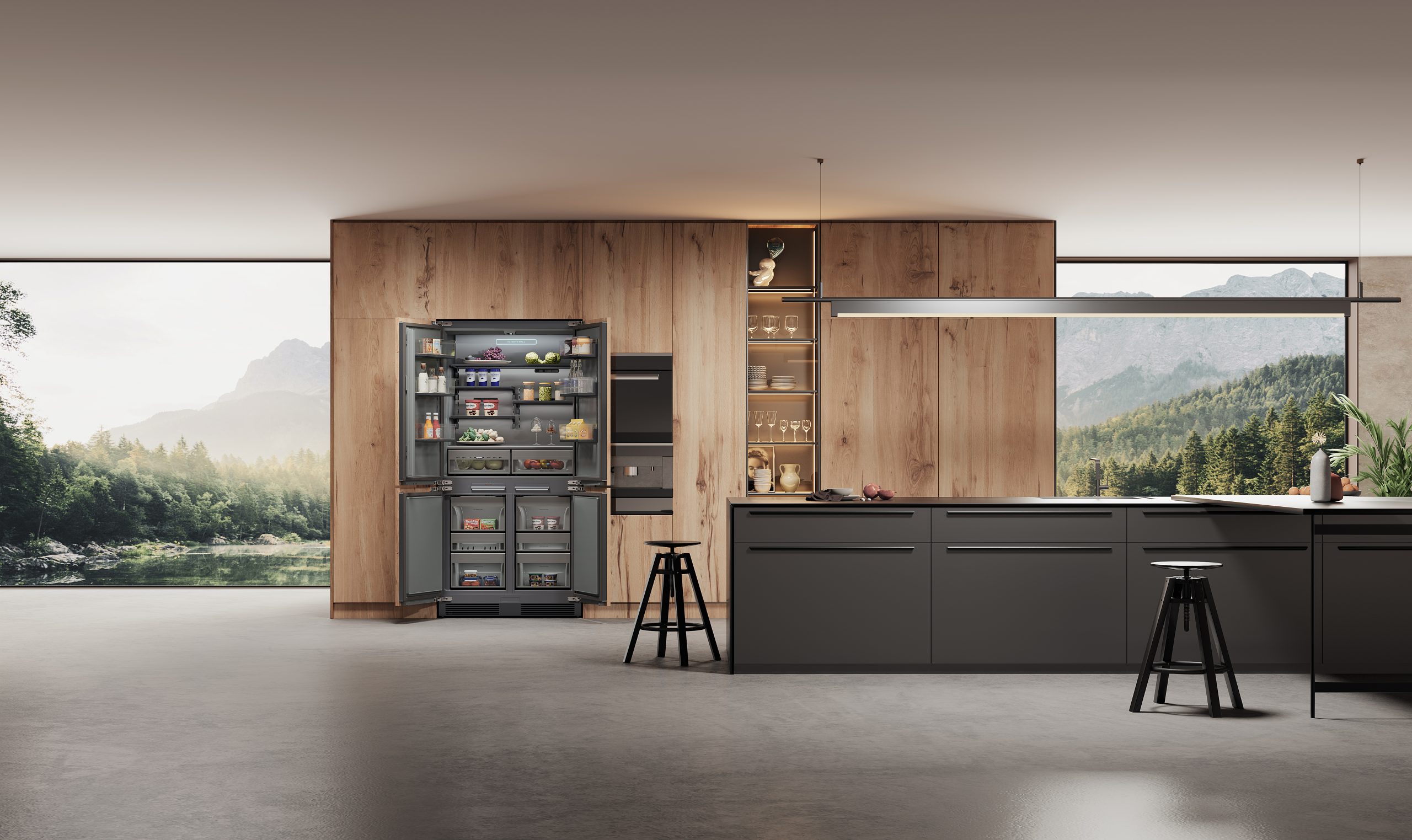
Also making its debut is GRF, an Italian company specializing in the design and production of high-end refrigerators - in particular large-capacity American models - which collaborates with Vegni Design, a well-known studio in the kitchen industry. At Pordenone, they presented several of their models, including those from the new "built-in" line, which are just 572 mm deep and can be built directly into kitchen cabinets.
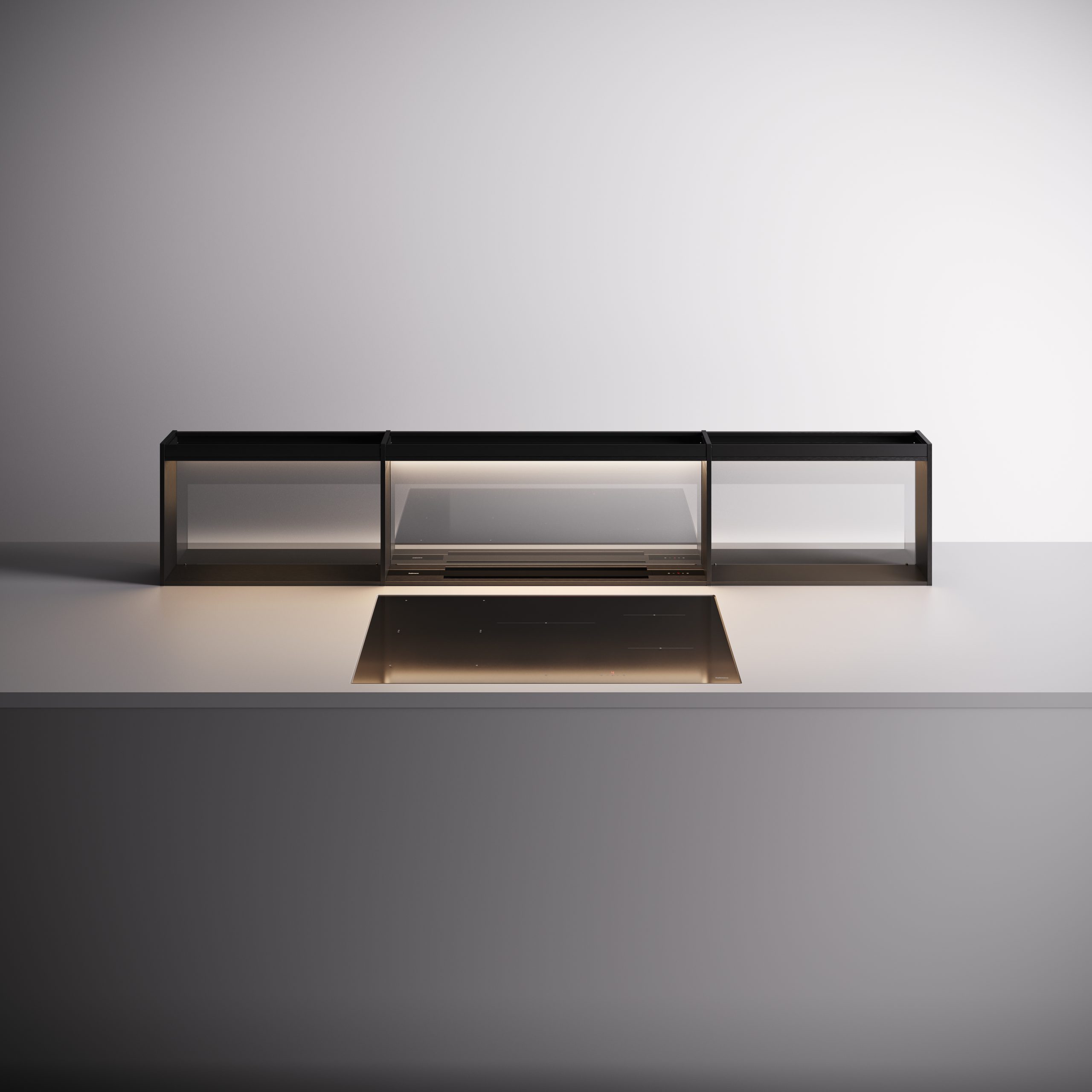
We speak of a cominig back for Barazza, presenting the high-impact, functionally intelligent AH.B system that transforms the worktop into a fluid, modular space. The project is by Alessandro Andreucci and Christian Hoisl, collaborating for the first time with the steel-working specialist.
Falmec also returned after a few years of absence, sharing the stand with Friulana Accessori, acquired at 100% in 2022. The star of the show was the Brooklyn hood, designed by Francesco Lucchese, which was selected by the Adi Design Index 2025.
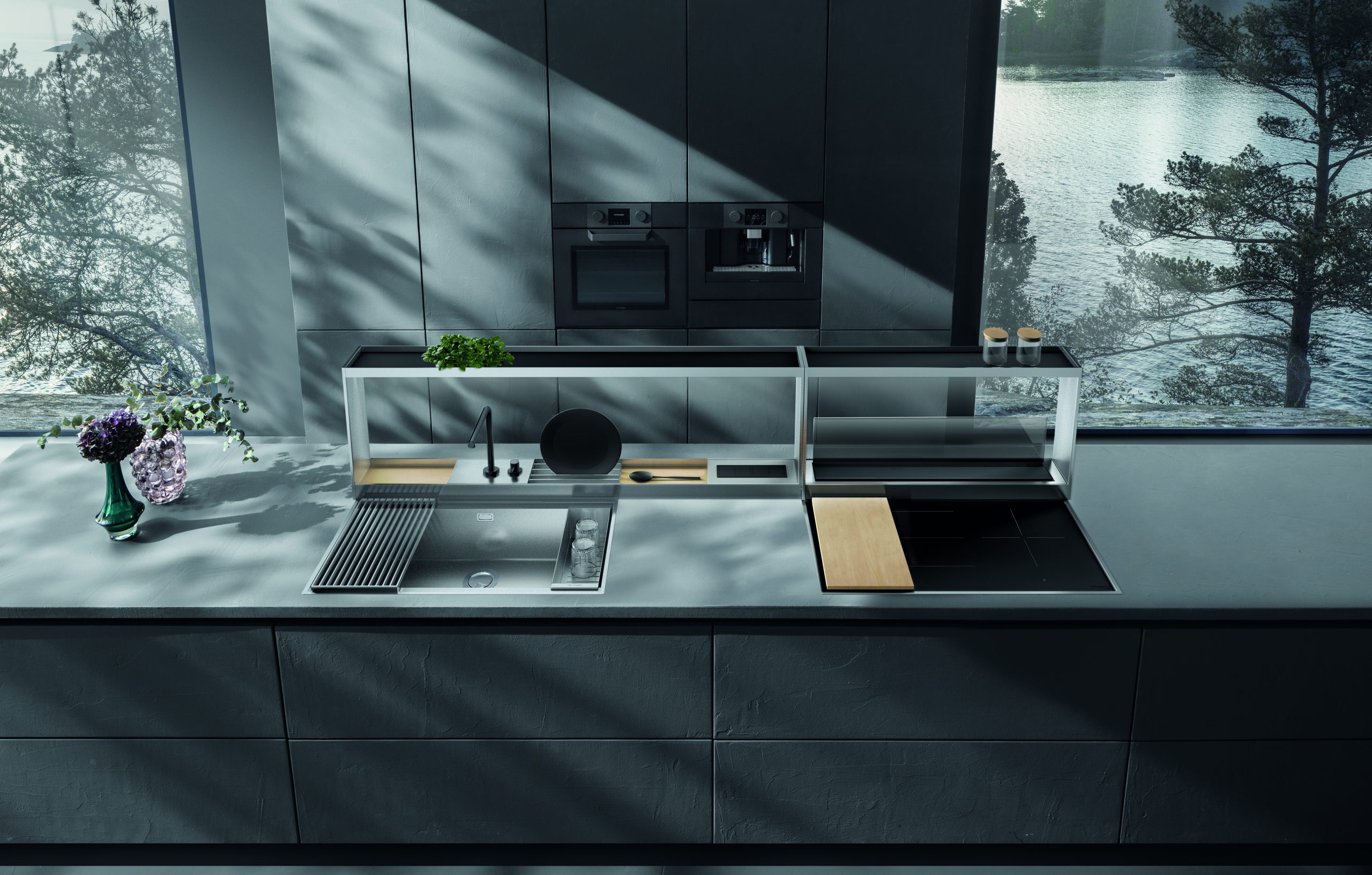
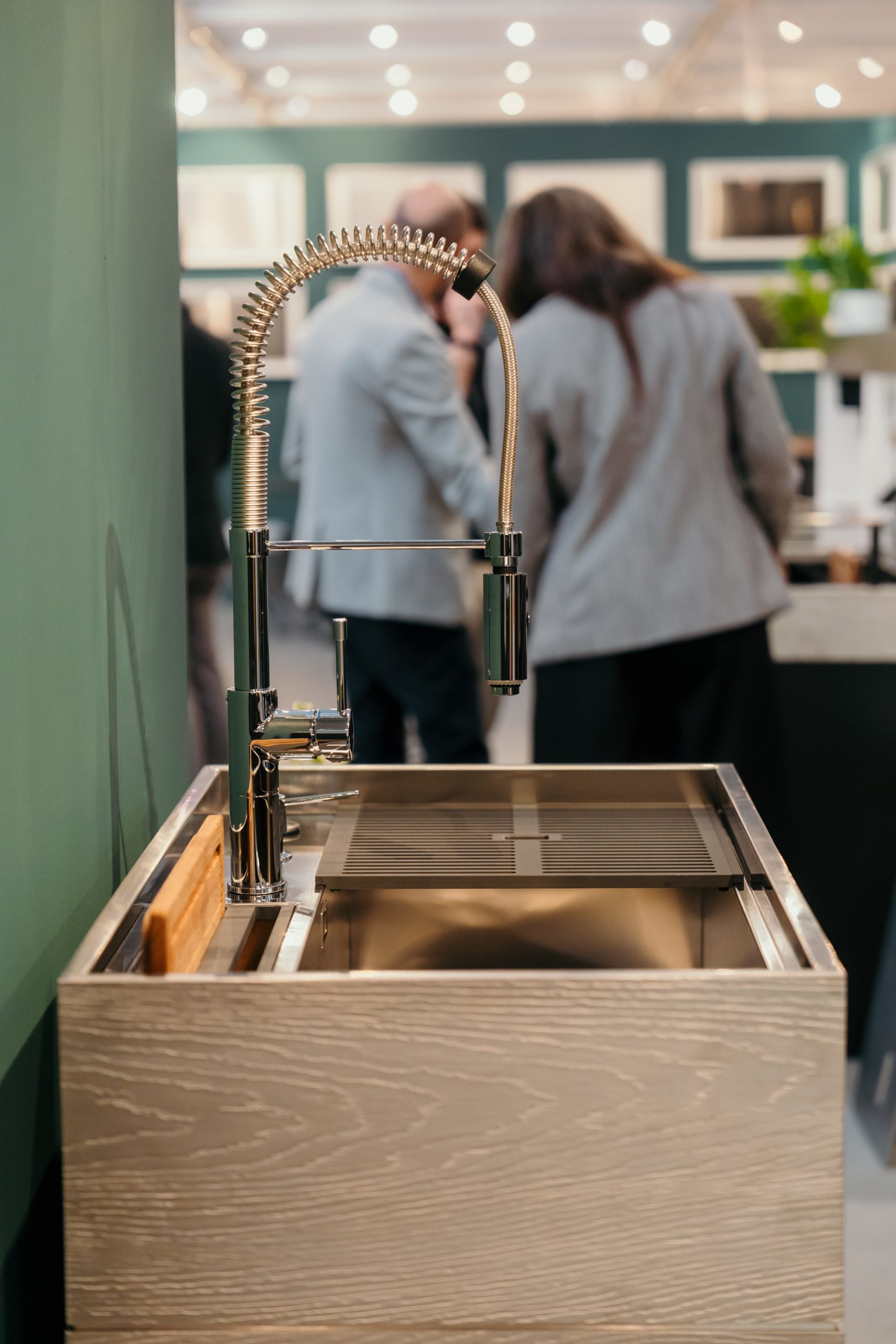
Another steel specialist, Foster, is making its second appearance at Sicam. In a high-impact stand, it presented multifunctional systems centered around the company's core sink and cooking areas, as well as highly skilled work with the material. The result is a unique steel that reproduces the grain of wood or the texture of stone, confirming how the emphasis on materiality extends across all sectors.
With a business originating in the sink world thanks in part to research into patented materials such as Granitek and Keratek, Elleci paid homage to this research with the Materials Wall installation, but also reaffirmed the important role of the appliance. For the first time, it presented technological solutions that enrich the sink area with functionality, with the Elleci Pure water treatment systems and filter mixers and the Elleci Zero food waste disposer for organic waste disposal.
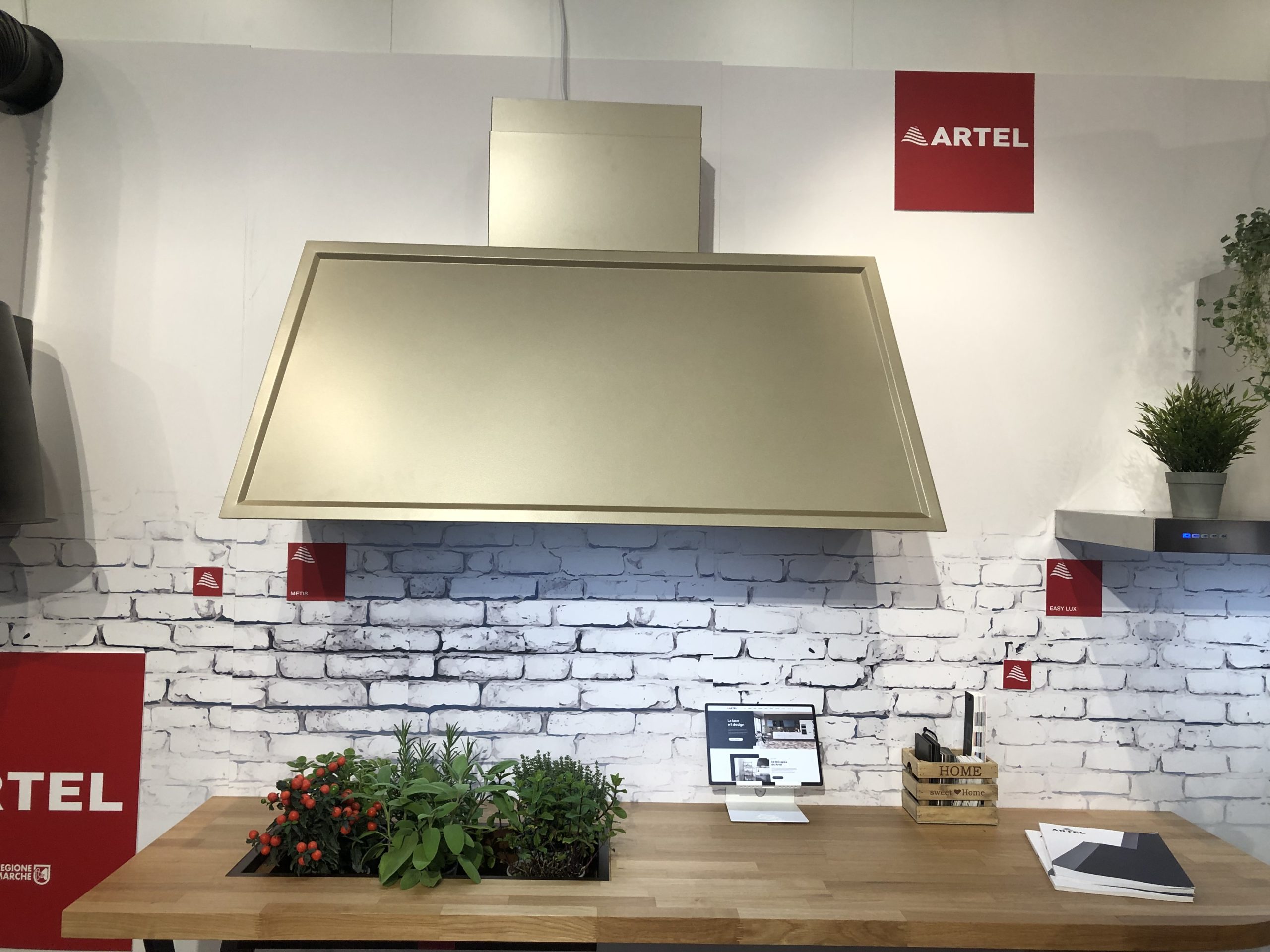
Artel, known as a manufacturer of classic hoods, also confirmed its presence at Sicam, continuing to focus on a vital area of taste. The range of matching metal accessories is also interesting.