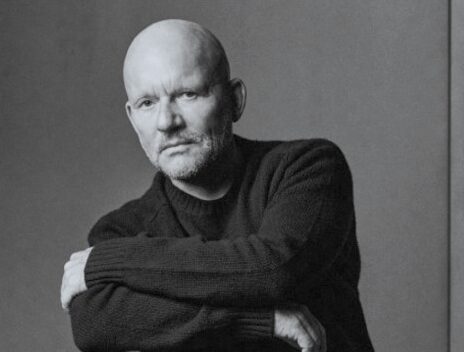
In 1989, the Belgian architect and designer founded the studio Vincent Van Duysen Architects, which today employs a workforce of around 40. The practice works on art direction, contract projects, product design, and commercial and residential architecture across Belgium, Europe, the Middle East, Asia and the United States, as well as the design of high-end retail spaces worldwide. Since 2016 he has been the creative director of Molteni&C and Dada. He has received numerous awards.
«In my work, architecture, interior and product design are closely interconnected,» says Van Duysen. «Whether I’m designing a building, an interior or a piece of furniture, the intention is the same: to create environments that convey a sense of balance, calm and longevity. My approach to design is often described as minimalist, yet it is more about reduction than minimalism itself. When proportions, light and texture are considered with restraint, the result tends naturally to be timeless. In this approach, materials play an important role. I am drawn to honest materials that age beautifully over time, such as stone, wood, plaster and metal. Tactile qualities are essential, especially in the kitchen; how a surface feels to the touch, the depth of the wood grain or the subtle gleam of stone all contribute to the experience of the space». Van Duysen’s design approach, particularly in relation to kitchen design, is clearly expressed in the new Physis by Molteni&C, presented during Milan Design Week 2026.
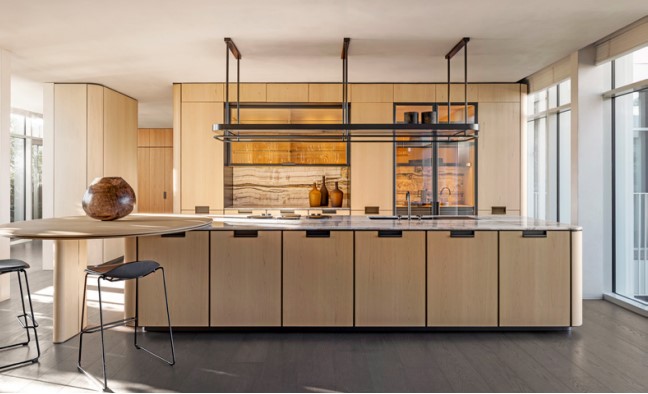
the heart of the home, interpreting the essence of the brand’s design through a sophisticated and contemporary language.
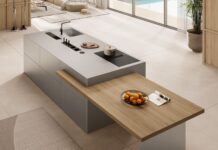
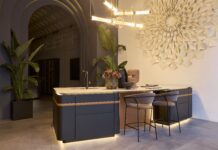
Attention to detail is expressed in the pewter handles, marble surfaces and Hinoki wood with its pronounced grain
«Physis combines architectural clarity with a strong material presence. At first glance, the
composition appears calm and structured, reflecting the restrained language that often characterises my work. But on closer inspection, the richness of the materials begins to reveal itself. Pewter handles, marble surfaces and the distinctive grain of Hinoki wood introduce depth and warmth. These are not superficial decorative elements, but rather ways of enriching the architectural language of the kitchen. Another important aspect of Physis is the treatment of geometry. Most corners are gently rounded, giving the kitchen a more organic and fluid character: a subtle softening of the architecture that creates a delicate contrast with the otherwise clear and composed structure. In the design of the extractor hood, forms continue this language of soft transitions. The idea was to create a balance between sobriety and material expression. The architecture of the kitchen remains clear and composed, while the materials and softened geometry give the space a tactile quality, character and emotional presence, as well as a sense of quiet grandeur.
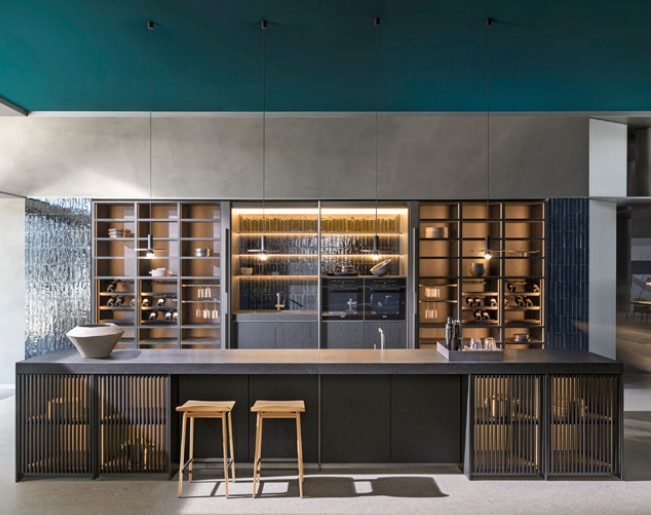
juxtaposed with solid forms. The island features the Stripe door in black oak slats with integrated internal lighting, metallised pewter lacquered panels and a 9cm-thick lava black stone worktop
"THE AIM IS NOT TO CREATE SOMETHING AUSTERE, BUT TO REMOVE WHAT IS SUPERFLUOUS SO THAT THE ESSENTIAL QUALITIES OF SPACE AND
MATERIALS CAN EMERGE"
In other models created for Molteni&C, such as VVD or Ratio, the kitchen is conceived almost as architecture within the home. Islands, cabinets and surfaces function almost like architectural planes that structure the interior. By reducing the visual noise and emphasising the clarity of these volumes, the kitchen becomes more integrated with the rest of the living area, acting both as a working and social space».
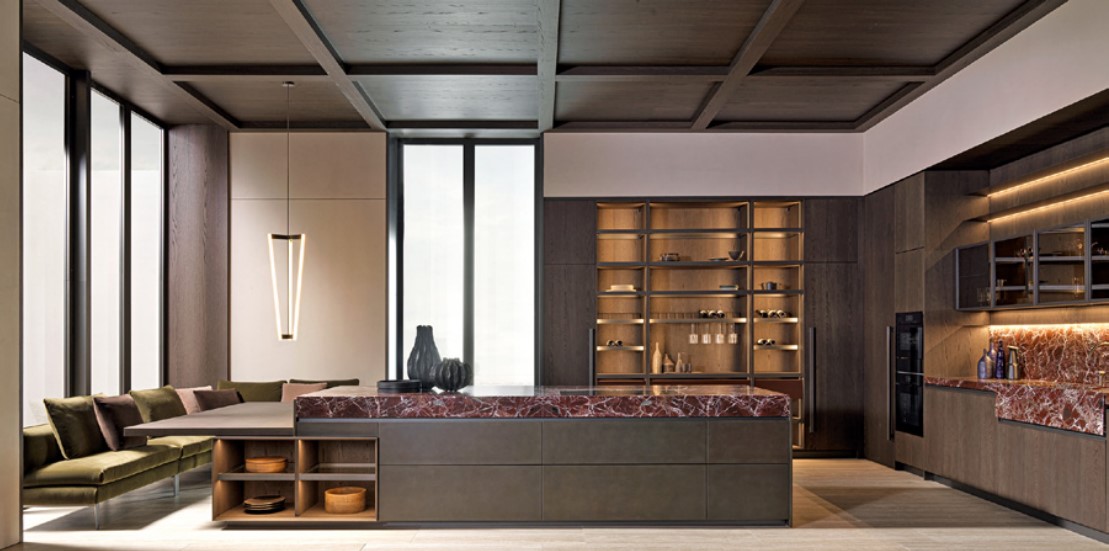
Today, the design world is paying more and more attention to impactful expressive language. According to Van Duysen, however, designers must look at the wider ecosystem without losing their own identity. «Trends are part of the design landscape and can reveal changes in how people relate to their homes. The interest in organic forms, colour and expressive materials reflects a desire for interiors that are more personal and emotionally engaging. At the same time, I believe architecture and design should always strive to achieve a certain timeless quality. When a project is too closely tied to a trend, it runs the risk of quickly losing relevance. For this reason, I focus on elements that endure: proportions, materiality and atmosphere: aspects that remain meaningful regardless of changing stylistic trends, allowing spaces to evolve together with the people who inhabit them».